The Democratic Republic of the Congo
The Democratic Republic of the Congo (DR Congo) has some of the most diverse wildlife in the world and is the only place where critically endangered Grauer’s gorillas are found.
About DR Congo
- About one-fourth the size of the United States, with a wide variety of terrain, including a portion of the Virunga mountains in Africa’s oldest national park (Virunga National Park).
- Varied climate, flora and fauna, including many unique species.
- Includes large areas of forest and biodiversity located outside of protected national parks.
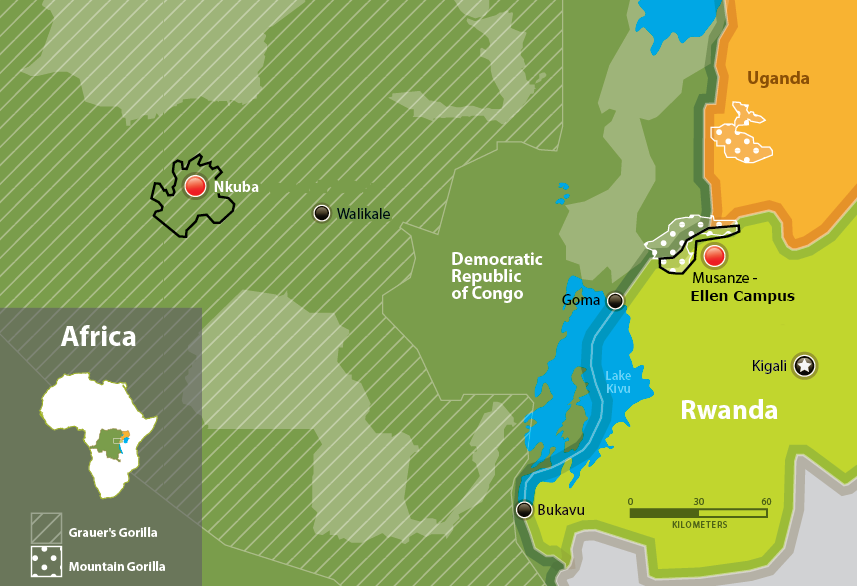
- Home to two types of gorillas: Mountain gorillas in the Virunga area, and Grauer’s gorillas in areas further west.
- Many ethnic groups, languages and dialects.
- A rich supply of natural resources.
- Several decades of security problems, conflict and instability.
- Extreme poverty in many areas.
Our Gorilla Conservation Work in Congo
We currently work in community forests in the Nkuba Conservation Area, where critically endangered Grauer’s gorillas are located. Here we monitor and protect groups of Grauer’s gorillas that live where there was formerly no protection.
We collaborate with local communities to get formal governmental recognition of these forests, which have been subject to degradation through mining, hunting, subsistence farming and other human activities.
The Grauer’s gorillas we protect here are not habituated to the presence of humans, so our trackers follow them at one day’s distance, using signs such as night nests, droppings, food remains and footprints to document them.
The Nkuba Conservation Area, which is located within the Congo Basin, also houses at least nine other globally threatened large mammals and serves as a carbon sink for an estimated quarter-billion tons of carbon.
Click here to read more about the Fossey Fund’s gorilla protection work.
Our Community Programs in Congo
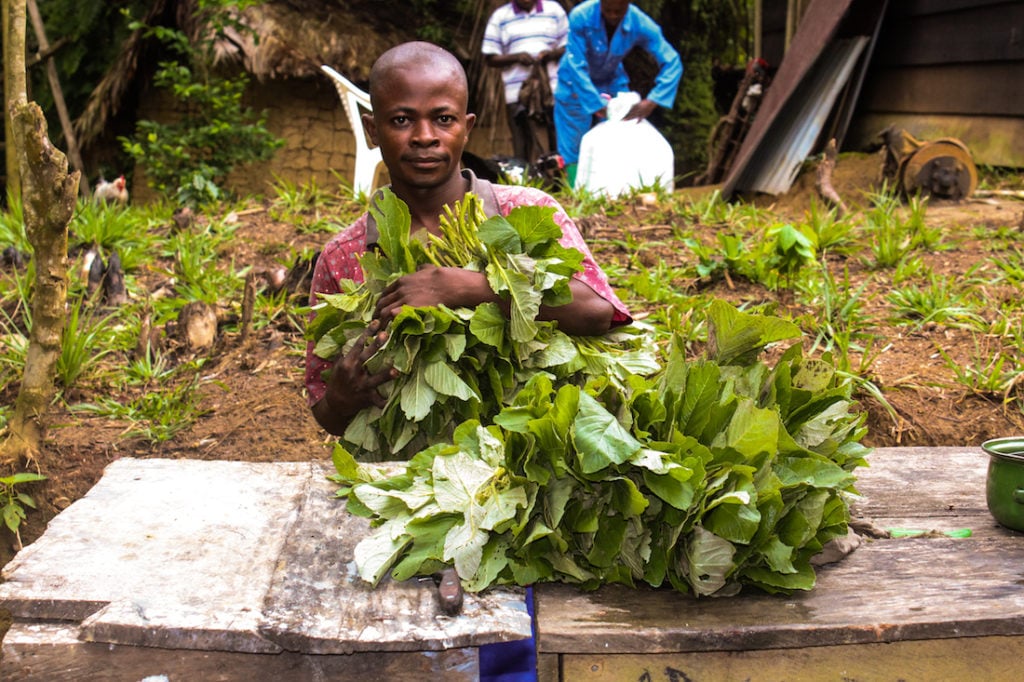
The Fossey Fund provides much-needed employment in this area of extreme poverty, by hiring community members to work in our protection, science and community engagement programs.
We also operate a variety of programs to help local people, including community farming projects to provide sustainable food sources, education opportunities for local students and adults, training of young conservationists, and livelihood programs.
Goals
- Work with local communities to continue increasing the number of Grauer’s gorillas protected, by designating community conservation forests.
- Help local communities rely less on forests for food by introducing alternatives, such as improved farming techniques and crop diversification.
- Increase programs to address community needs, such as education, livelihoods, and improved infrastructures.
- Understand the roles that mining and other illegal activities play in the loss of gorillas and other biodiversity, and develop interventions to address these threats.
- Increase knowledge about Grauer’s gorillas, which are the least-studied of all gorilla species.
Challenges
- Most Grauer’s gorillas live in extremely remote areas and difficult terrain, outside of national parks.
- Mining and other illegal activities are common in the region where gorillas live, leading to increased hunting and deforestation.
- Most local communities suffer from extreme poverty and malnutrition and may still depend on the forest for food and other resources.
- Numerous rebel groups operate within the forests, which can make protection extremely difficult and dangerous.