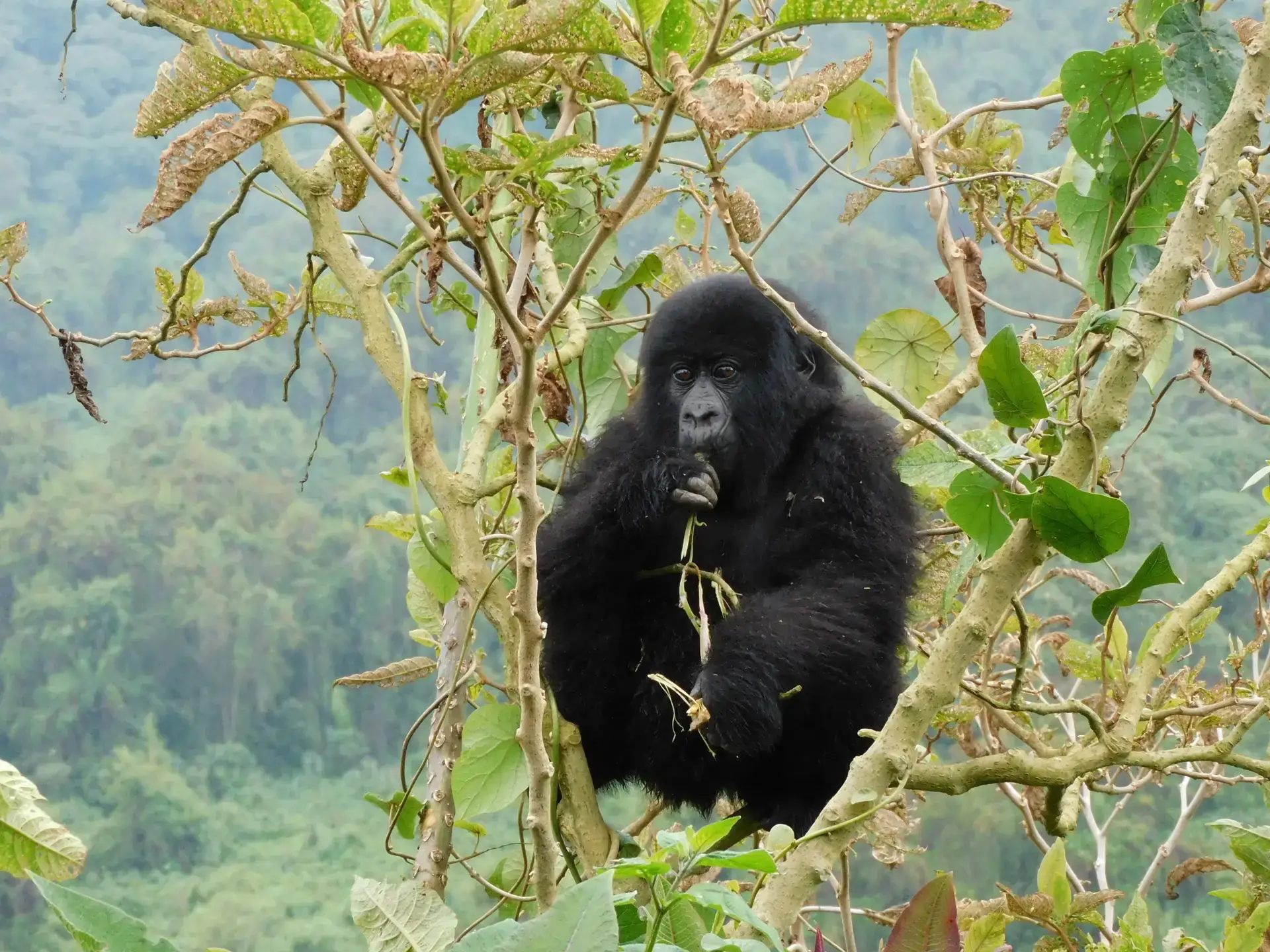
The Titus mountain gorilla family monitored by the Dian Fossey Gorilla Fund since its formation has always had its own unique rules. Of greatest interest is that among its current males, a clear hierarchy never fully emerged. For many years, the two older silverbacks, Pato and Urwibutso, have shared similar roles and equal respect from other group members. This is unusual because most mountain gorilla groups have only one clear dominant silverback.
Despite this sharing of roles, Pato had generally been considered the more dominant, since the death of former leader Turakora in 2016. But more recently, Urwibutso has gained dominance.
Dominance shifts among gorillas are fascinating but rare events. In five decades of observing mountain gorillas, very few such shifts have been documented. And the dominance shift between Pato and Urwibutso hasn’t been at all straightforward, as both males seem to have inherited a diplomatic style from their father, Titus, whose leadership was unusually kind and tolerant.

Silverback Pato seemed to be the more dominant in the group until a clear turning point last year.
Photo by Gabriel Nyirijuru
Leading female plays a critical role
In recent years, Urwibutso has begun to win more conflicts. Yet, at the end of these disputes, group members still gather around Pato. This is especially true of the senior female, Kurudi.
For many years Kurudi was the only female in the Titus group – her bond with Pato dates back to when she joined the group in 2013. At the time, Pato was only 13 years old and was third-ranking in the silverback hierarchy. Despite his young age, his gentle character quickly attracted Kurudi and they spent much time together.
This relationship strengthened over time. After the deaths of two older silverbacks in 2014 and 2016, Pato became the main candidate to lead the group, at only 16 years old. Urwibutso, just one year younger, remained close behind and that’s when the two males formed an unusual partnership, sharing leadership in ways never seen before. Pato and Urwibutso managed to coexist without a clear winner for many years.
Their biggest disputes actually came from competition over spending time with Kurudi, who became the focus of both males. During tense moments, Kurudi actively calmed the situation by dividing her time between the two males. Yet during relaxed periods, she still clearly preferred Pato’s company.
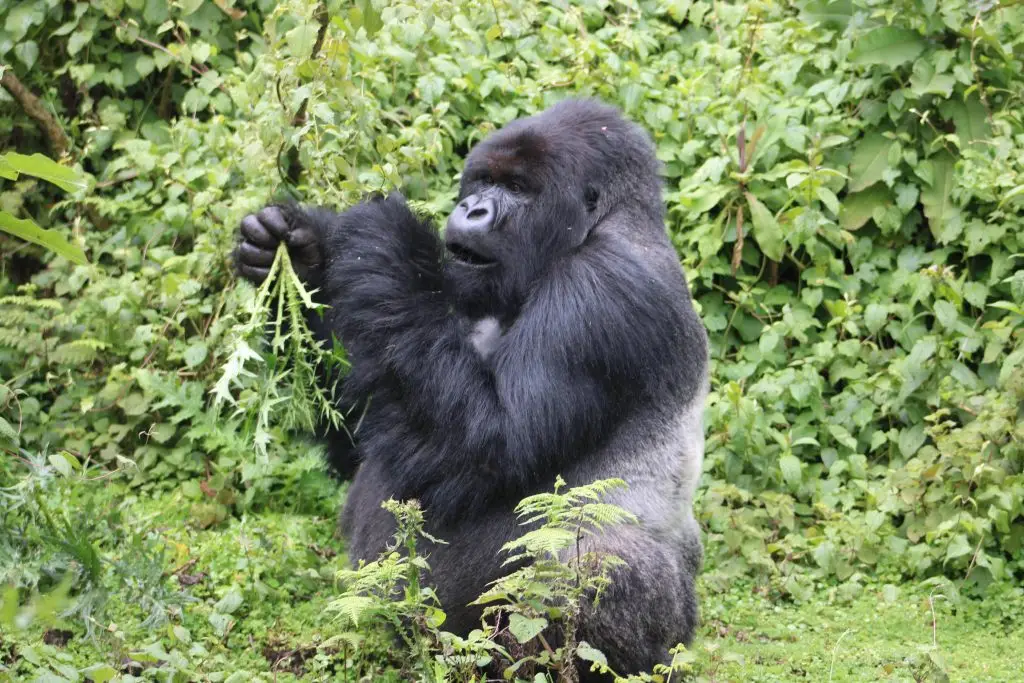
Silverback Urwibutso has shown recent signs of clear dominance. Photo by Dominic Mayo
Turning point comes with new female
More recently, the situation began to change. Urwibutso has steadily become more decisive in group leadership and mating. The arrival of new female Agaseke in 2022 redirected the focus of the conflicts between the males, though tensions never lasted long.
But by the end of 2024, a clear turning point occurred. Urwibutso seemed less tolerant of shared leadership and began asserting dominance, making use of his larger size. He started controlling feeding spots, deciding group movements, and getting more mating opportunities. Pato, smaller and less confrontational, did not strongly resist this shift.
At the start of 2025, researchers saw Urwibutso directly displace Pato for the first time, a clear sign of dominance. This event forced us to officially recognize Urwibutso as the new dominant silverback of the Titus group.
Interestingly, this shift did not drastically change the group’s dynamics, though it marked an important milestone. The group clearly now follows Urwibutso’s lead.
But what about the long friendship between Pato and Kurudi? Even though Kurudi recognizes Urwibutso’s authority, she continues to choose Pato during resting times. The two are still often seen close together.
This subtle and gradual change highlights the complexity of gorilla social behavior. Small gestures and quiet moments often reveal more than loud disputes, giving us deeper insights into gorilla life.
This article is part of a series presented by the Fossey Fund’s gorilla program Senior Advisor Veronica Vecellio, focusing on the mountain gorillas the Fossey Fund protects and studies every day in Rwanda. Veronica has worked with these gorilla families for more than 20 years and shares her deep knowledge and insights about their lives.