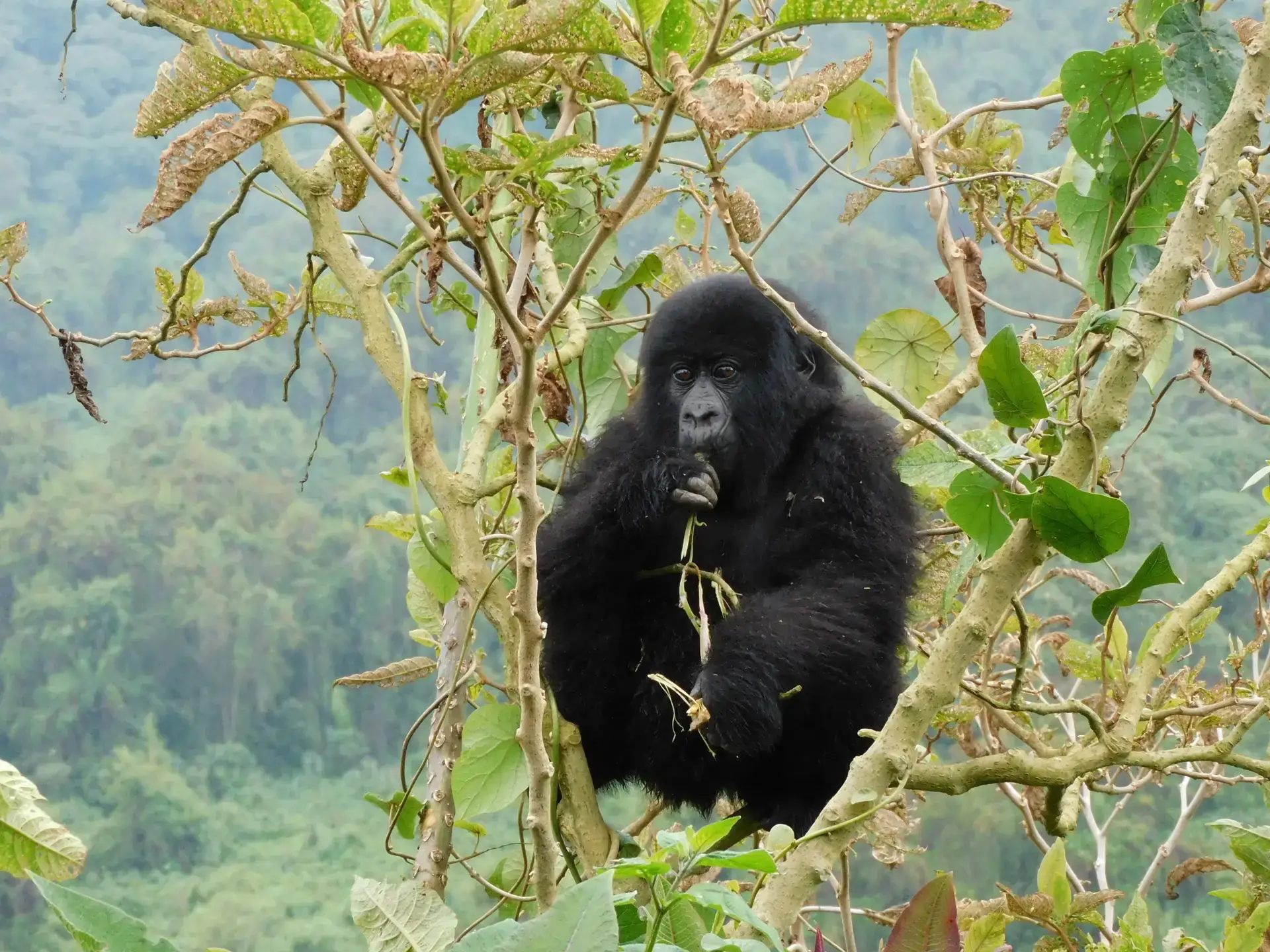
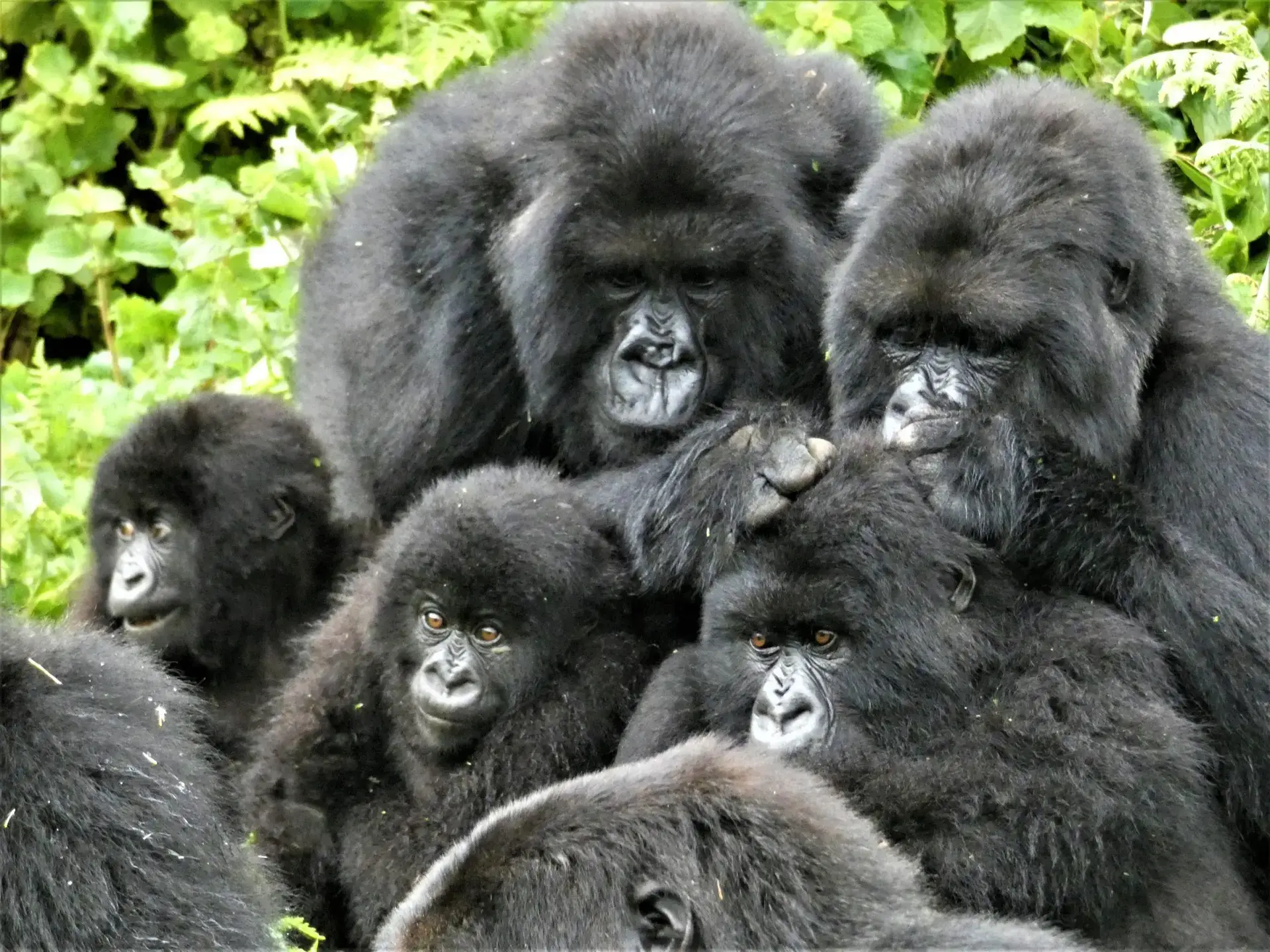
A newly published long-term study of mountain gorillas has provided the most comprehensive insights yet into why female gorillas, and sometimes other group members, continue to carry infants after they die. Drawing on nearly 22 years of continuous observation, our team documented maternal behavior following 141 cases of infant death – the largest dataset of its kind for any ape species, and far exceeding the only two previously published cases in mountain gorillas.
Corpse carrying has been observed in a number of primates and even non primates such as dolphins. In the current study, our team found in more than 60 percent of cases, mothers carried their deceased infants, sometimes for days or even weeks.
The study was led by James Munyawera, who first came to the Fossey Fund as a University of Rwanda student for our undergraduate field courses. He went on to become one of our research assistants, collecting data about the gorillas using our long-term behavioral protocol, and then was promoted to Field Data Officer, responsible for organizing all the data collection on the many gorilla families we study. Munyawera was then awarded a fellowship at the University of Oxford and has recently begun a Ph.D. program at the University of Oregon with a focus on gorilla genetics.
“While spending six years observing mountain gorillas in the forest and witnessing how they react when an infant dies, I became interested in this topic to understand what might be influencing the different types of behaviors we see,” says Munyawera.
“These moments are emotionally powerful and understanding behaviors related to these losses could deepen our understanding of the gorillas’ social bonds, caregiving and how they experience loss. Using our long-term data was an excellent opportunity to understand these behaviors more systematically.”
What we learned
This study showed that the strongest predictor of whether – and for how long – a mother carried her infant’s corpse was the cause of death. Infants who died from non-traumatic causes such as illness were far more likely to be carried and for longer periods than those who died from traumatic causes, including accidents or injuries. This pattern mirrors findings from previous studies of chimpanzees and from broader analyses across primate species. One explanation is that traumatic deaths provide clearer cues that the infant has died, such as visible wounds or blood, which may help mothers detect death more quickly.
Detailed behavioral observations showed that mothers often directed typical caregiving behaviors toward deceased infants, especially when death was non-traumatic. These behaviors included grooming the body, carrying it on the chest or head, licking it, staring at it and sometimes shielding it from other group members. Such actions are normally directed toward living infants, suggesting again that when there are no obvious external signs of injury, mothers may not initially recognize that their infant has died. Instead, they may continue to treat the infant as alive, at least in the early period following death.
The study also documented interactions with infant corpses by non-mothers, including both males and females of various ages. In some cases, these individuals carried or closely attended to the corpse. These behaviors differ somewhat from patterns observed in chimpanzees and may reflect the particularly high levels of social cohesion in mountain gorilla groups.
Why this study matters
The Fossey Fund’s unprecedented dataset offers valuable insight into the emotional and social lives of mountain gorillas, as this study shows. By documenting their behaviors in detail, long-term research helps deepen our understanding of gorilla societies and strengthens our connection to one of our closest living relatives.
This study also highlights the growing importance of the Fossey Fund’s mentorship of early-career scientists where we work in Africa. Mentorship and capacity building are central to the Fossey Fund’s mission, strengthening conservation through local leadership, long-term research and scientific excellence. Munyawera’s research builds on decades of continuous monitoring of mountain gorillas and provides new insights for ongoing studies.
“This study shows what becomes possible with nearly 60 years of continuous data – we can move beyond anecdotes to understanding patterns in these rare, emotionally powerful moments,” says Dr. Tara Stoinski, Fossey Fund President and CEO/Chief Scientific Officer.
“What’s particularly striking is how the circumstances of death shape maternal behavior. The finding that traumatic versus non-traumatic deaths lead to such different responses tells us something important about how gorillas perceive and process loss – insights we could only gain through systematic, long-term observation.”