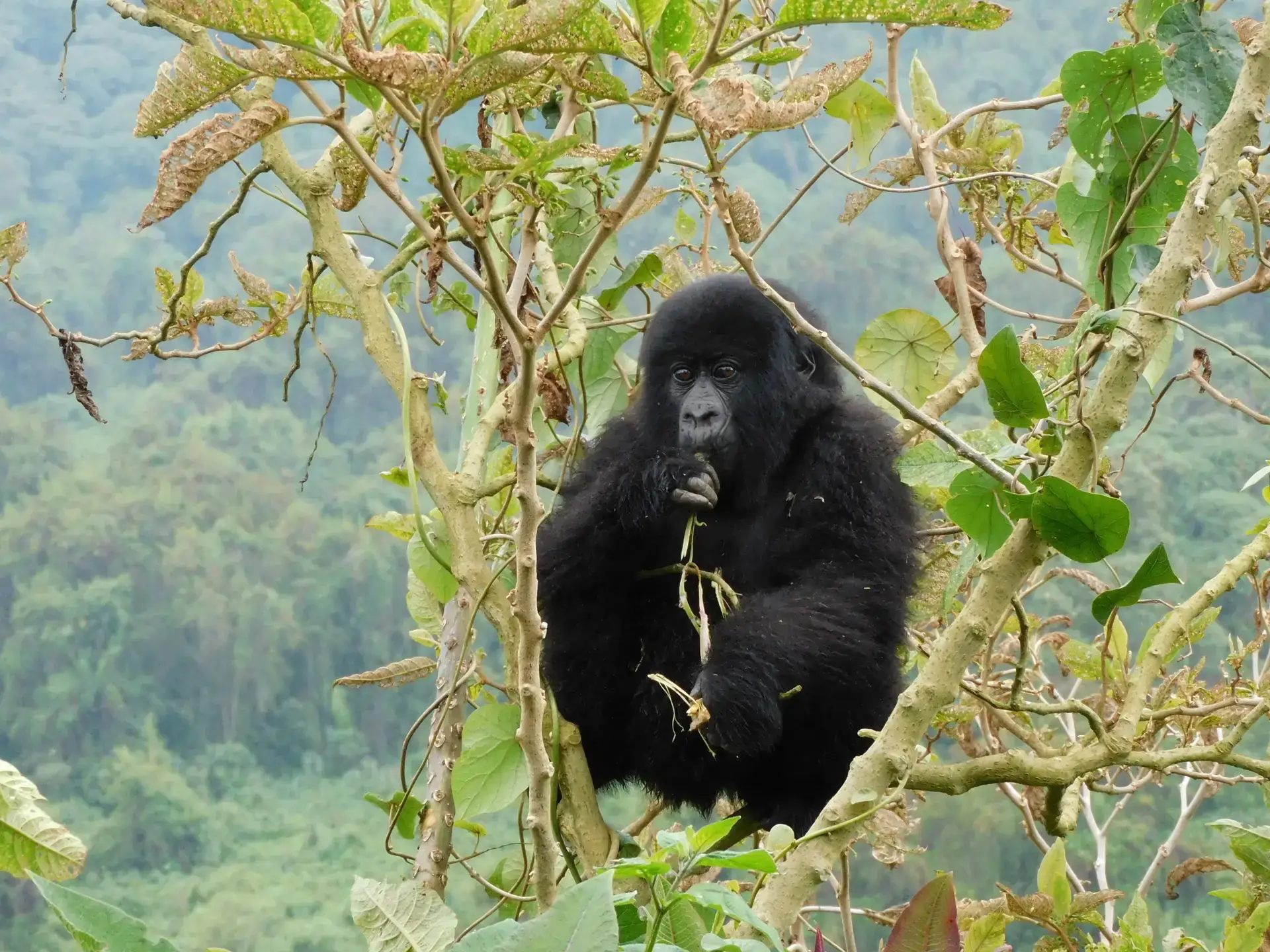
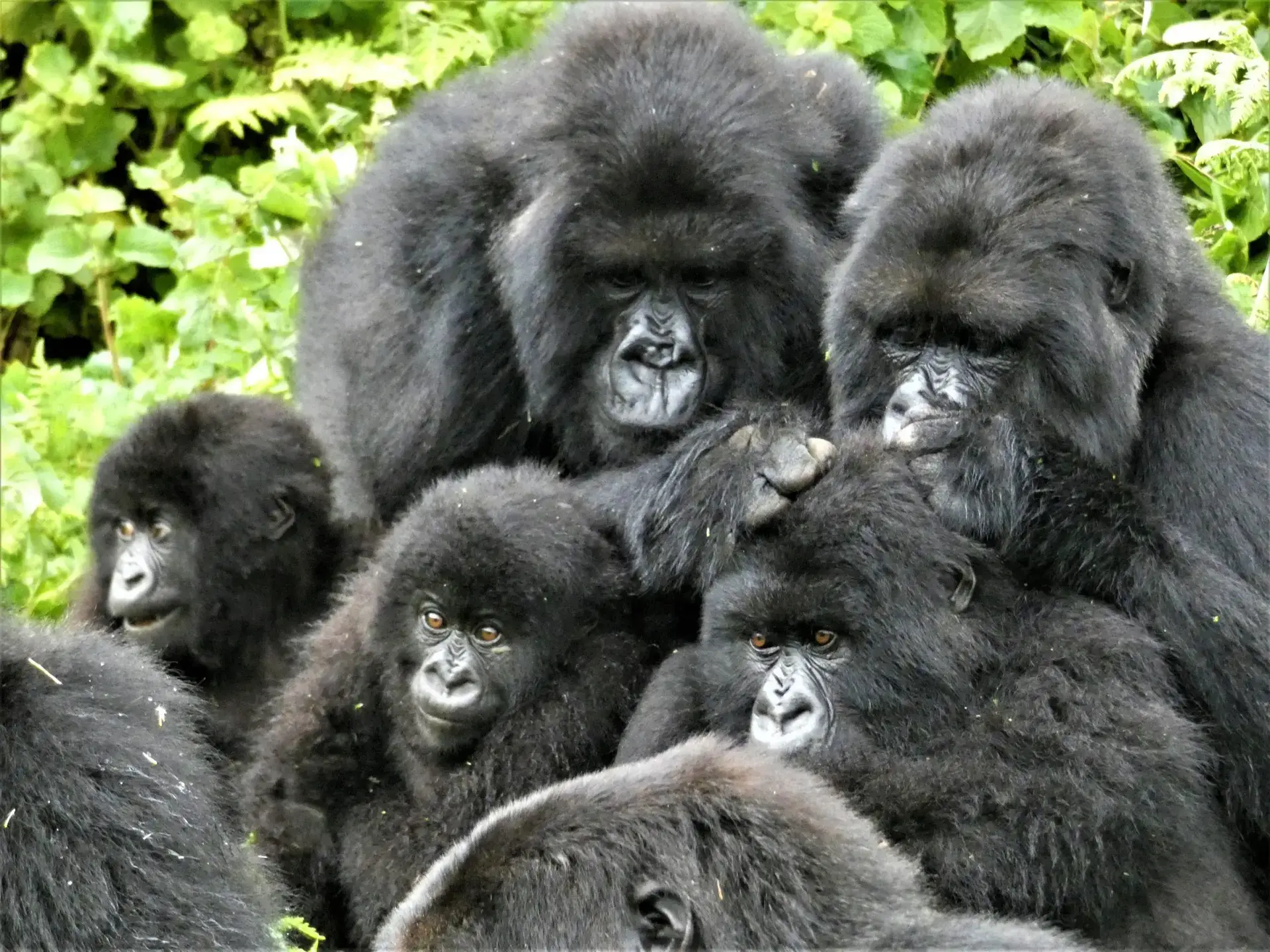
One of the most appealing connections between gorilla life and our own is how clearly gorillas show affection. Inside a gorilla family group, individuals build and express social bonds through a variety of behaviors. Like humans, gorillas express care and love toward different members of their group, but not all in the same way and not all for the same reason.
Relationships with silverbacks
The dominant silverback is often the center of these relationships. Showing closeness to him can have a strategic value, because staying near the dominant male increases protection for females and their offspring. Yet not all relationships with the silverback are based on strategy. Over time, genuine affection can grow, and it is not rare to see strong and lasting bonds between a silverback and females. Some relationships clearly go beyond simple protection and suggest real preference and trust.
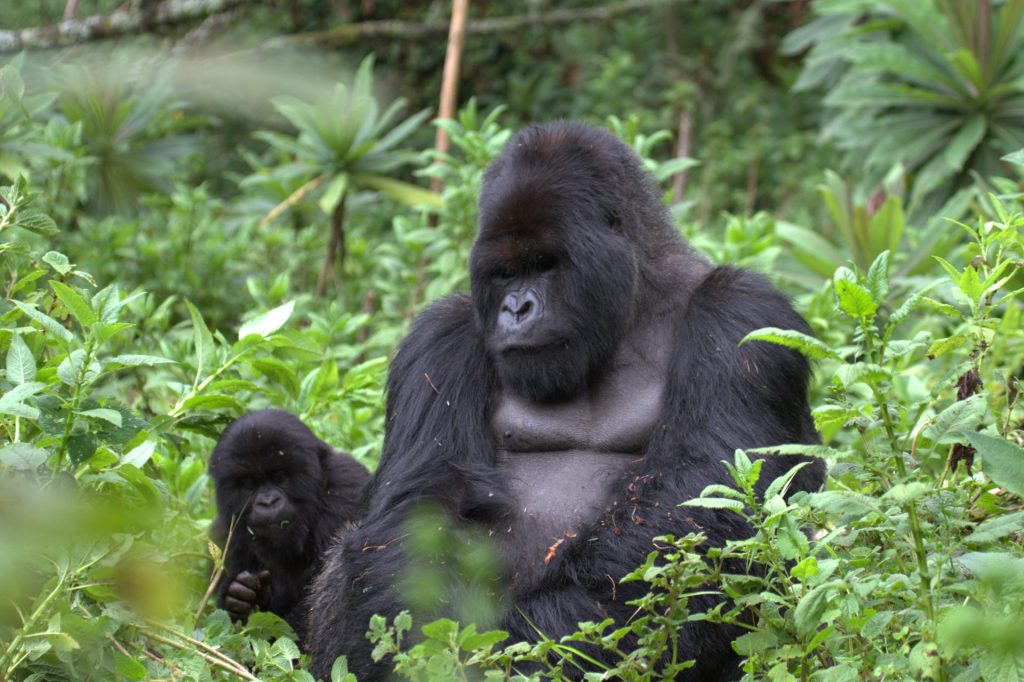
Silverback Ubwuzu (right) with juvenile Ubusugire (Ubi) in Pablo group. Photo by:Gabriel Nyirijuru
Bonds between silverbacks and infants are another powerful part of gorilla social life. Protecting infants is central to a silverback’s role. It shapes how he chooses safe areas, avoids conflicts with other groups and positions himself during encounters.
Beyond protection, silverbacks often interact gently with young gorillas. Seeing a small infant playing near a large silverback is something our field teams witness often. The size difference seems to attract the youngsters, who can use the large male as a kind of playground. The patience and gentleness shown by silverbacks during these moments is one of the most touching scenes in the forest.
Mother and infant bonds
The strongest and most visible bond in a gorilla family is between mother and infant. And this connection does not end when the infant grows. Maternal family lines are among the most stable bonds within a group, especially when mothers and offspring live in the same group. Maternal lineages, from grandmothers to grandchildren, remain strong over many years and can influence important life decisions, such as whether a young gorilla stays in the group, emigrates, or chooses which group to join. In fact, we have observed that when the mother is in the group, males are less likely to emigrate.
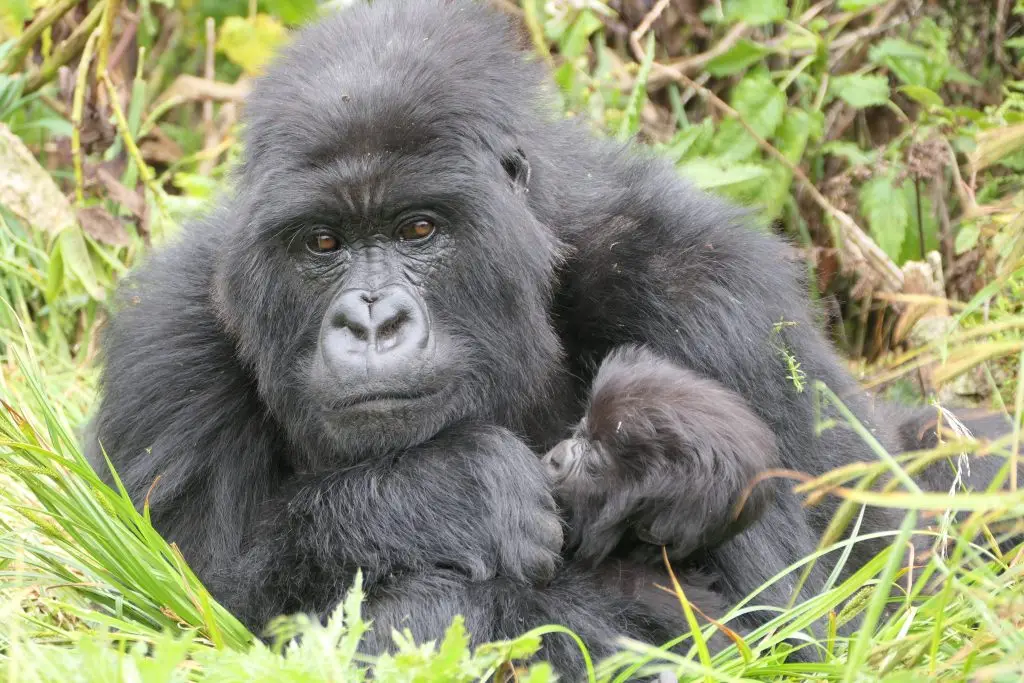
Mother Izihira with her young infant. Photo by: Emmanuel Izabayo
Girl groups
Females also develop close friendships with other females in the group. Raising infants often brings females together. When infants reach the age when they start moving and exploring, being close to other infants encourages curiosity and play. It is also common for younger females without offspring to take on the role of babysitters, practicing useful maternal skills and expressing a strong caring instinct. These shared experiences strengthen bonds between females.
Our research has shown that these friendships matter later in life. When females transfer to a new group, the presence of females they have lived with before can strongly influence their choice.
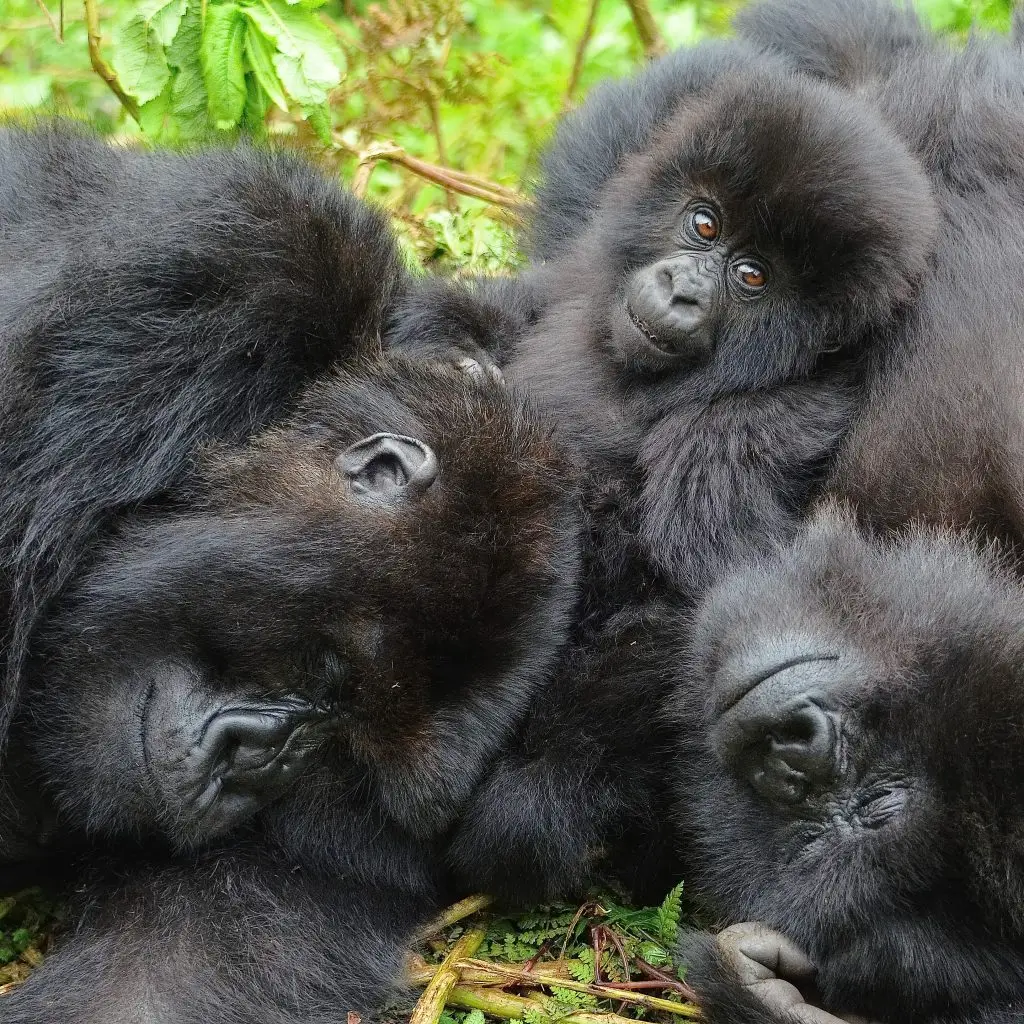
Adult females often bond with each other and help with offspring.
Expressing social bonds
Lip touching
This behavior most closely resembles a human kiss. It is very common between mothers and infants, where gentle touches of the face with the lips are frequent. It is a calm and intimate interaction and one of the sweetest behaviors to observe.
Physical contact
Physical contact is a subtle but very important sign of affection. Gorillas resting in contact is a behavior our researchers closely document, because it reveals social relationships inside the group. Observing who who rests near whom, and who touches another individual, helps us understand the social network and identify strong bonds.
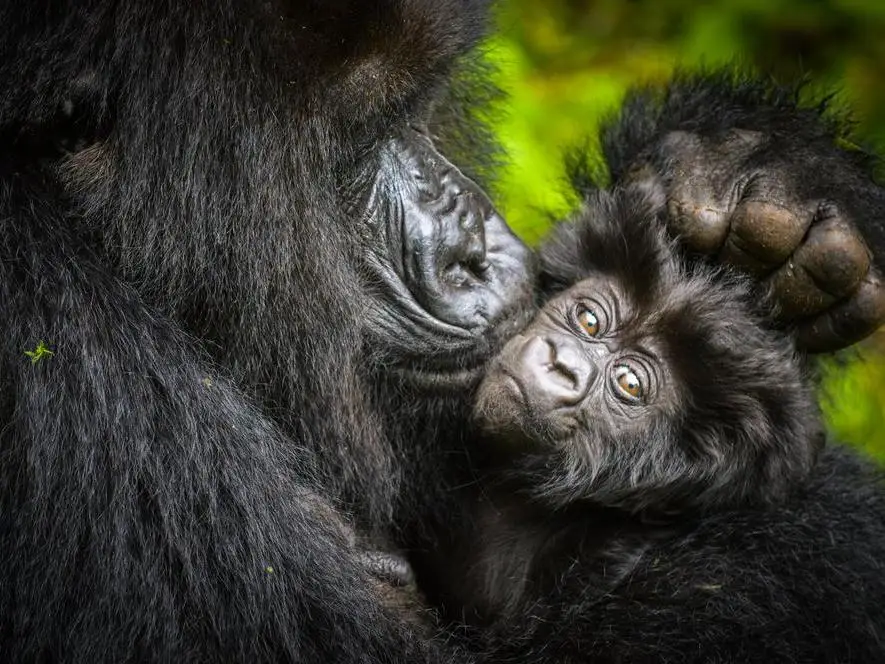
Physical contact among gorillas, including touching with lips, helps build bonds.
Grooming
Grooming is one of the main behaviors gorillas use to build relationships and strengthen existing bonds. It goes far beyond simply removing dirt from hair. Grooming is a calm and peaceful moment in gorilla social life, and it is one of the most affectionate behaviors they share.
Helping each other
Gorillas clearly care for one another. When an individual is injured or weak, others may help by supporting or even carrying them. Young gorillas are often helped while crossing rivers, riding on the back of an older individual. If one gorilla struggles to move, the entire group may slow down to stay together.
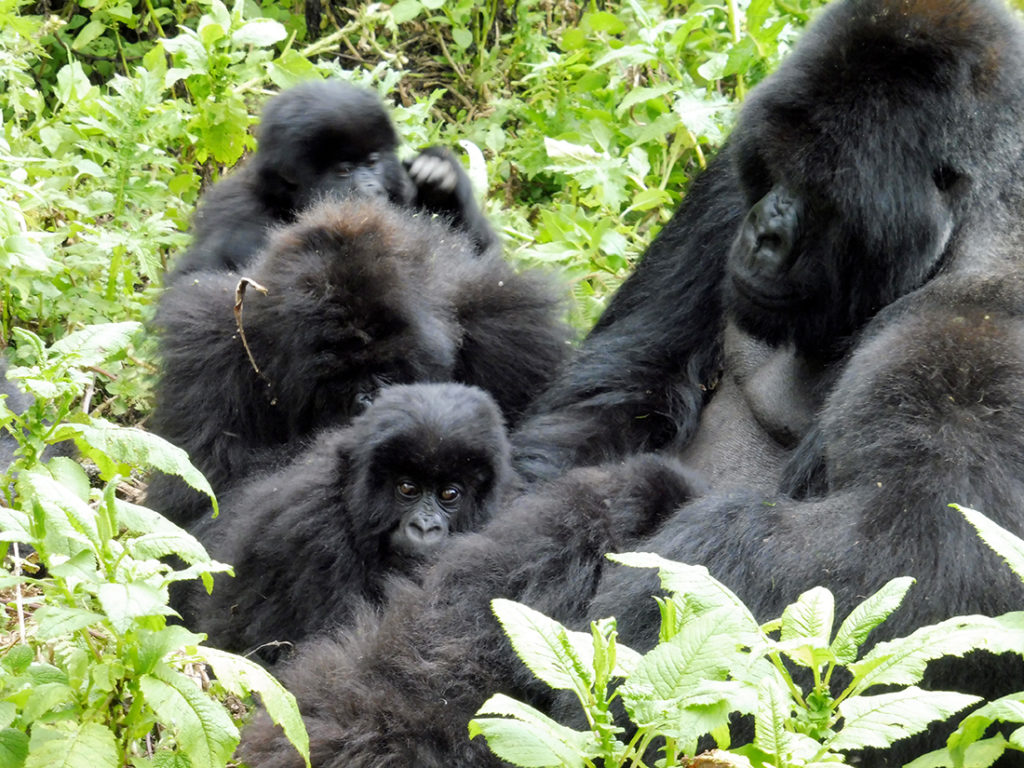
Grooming is a key behavior in helping gorillas build relationships.
Eye staring
Staring can have different meanings, from curiosity to tension or courtship. Gorillas are not shy about close and intense eye contact. When intentions are aggressive, direct staring may be avoided to reduce conflict, and silverbacks often adopt a posture using side-looking. When intentions are positive, staring becomes more direct and prolonged. Females ready to mate may stand in front of a male, stare intensely, and even touch him to get his attention and solicit an action.
These behaviors show us that gorilla families are built on strong emotional connections. Love, care and trust are not human-only traits. They are deeply rooted in gorilla society and visible every day in the forest.
This article is part of a series presented by the Fossey Fund’s gorilla program Senior Advisor Veronica Vecellio, focusing on the mountain gorillas the Fossey Fund protects and studies every day in Rwanda. Veronica has worked with these gorilla families for more than 20 years and shares her deep knowledge and insights about their lives.