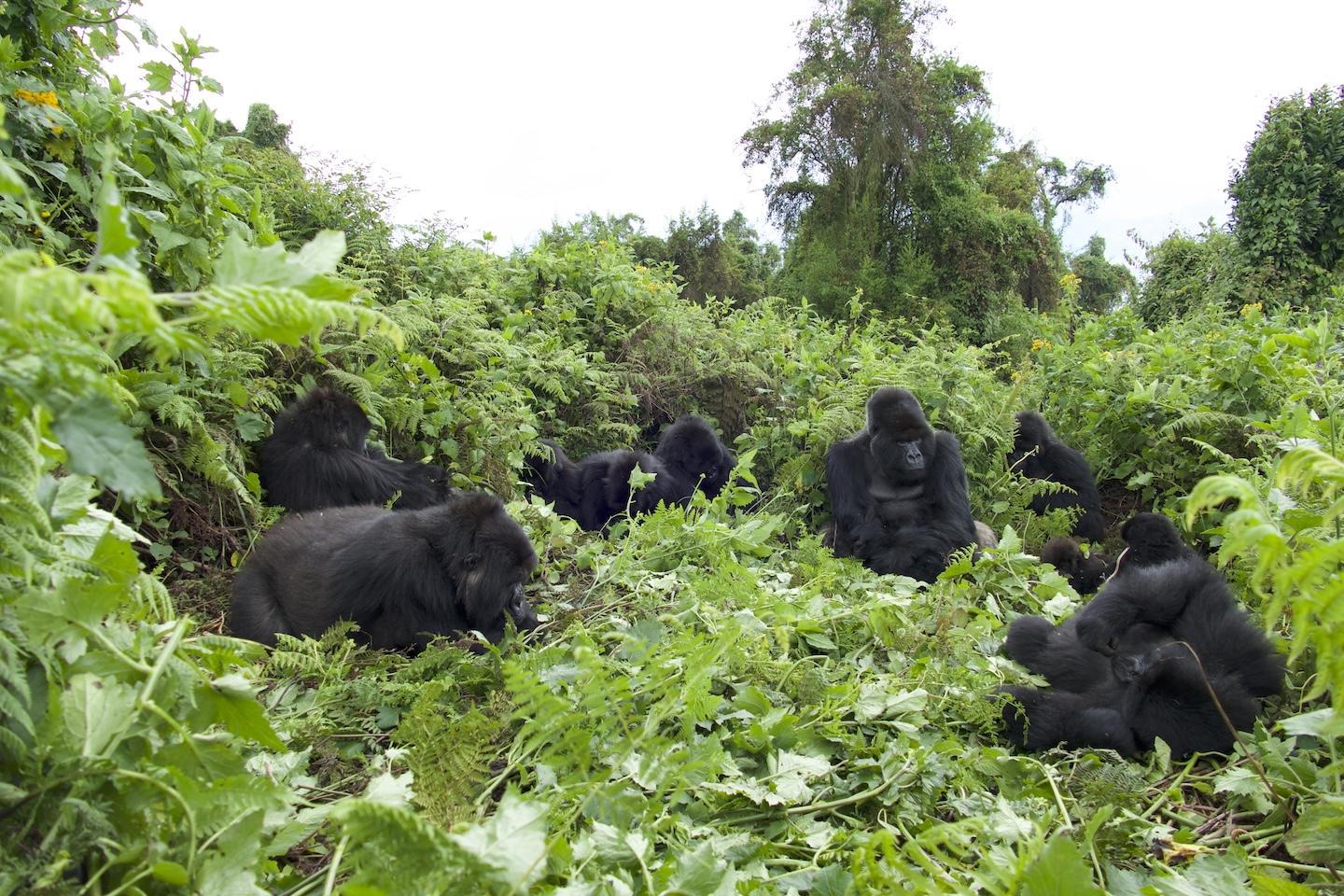
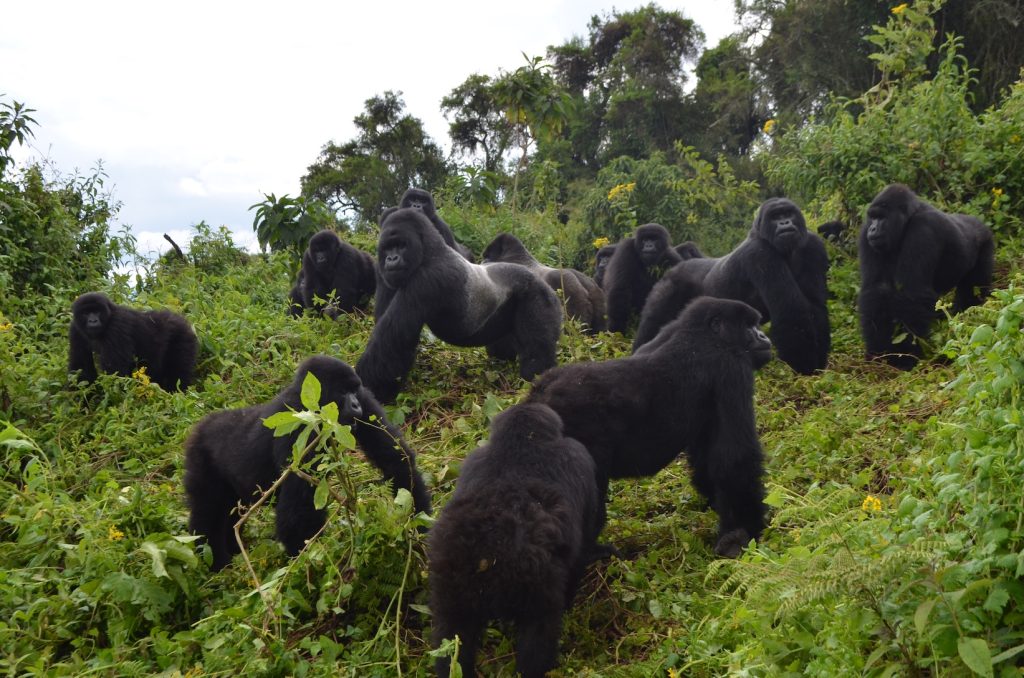
For six decades, our team at the Dian Fossey Gorilla Fund has stood at the forefront of gorilla research and conservation, a legacy that made us natural scientific partners on A Gorilla Story: Told by David Attenborough. Our long-term knowledge of gorilla behavior and intimate familiarity with the Pablo group helped shape the new film’s emotional and scientific narrative, turning everyday moments into a powerful portrait of family dynamics, individual personalities and life in the forest.
In 2020, Silverback Films approached us after the success of Netflix’s Chimp Empire, looking for a strong story from Rwanda. With legendary silverback, Titus, already featured on PBS Nature, we recommended the Pablo group – monitored by our team since the group formed in 1993 and connected to the gorillas Dian Fossey studied in 1967.
Across two years of filming, the crew witnessed far more than expected: a dramatic tale of legacy, complex relationships and record-setting individuals. Senior Gorilla Advisor Veronica Vecellio and President and CEO/Chief Scientific Officer Dr. Tara Stoinski served as scientific advisors, translating nuanced behavior into a compelling story as gorilla history unfolded, while Rwanda Country Director Felix Ndagijimana and Gorilla Program Manager Jean Pierre “Samedi” Mucyo served as field coordinators.
The challenges behind the cameras
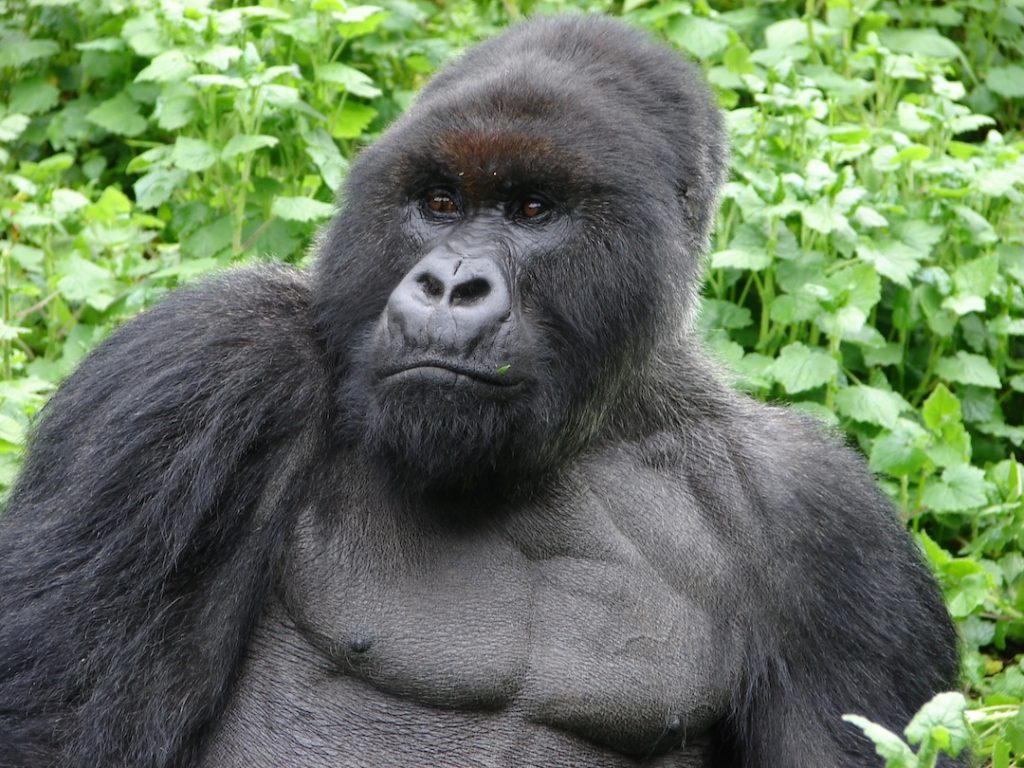
Filming the Pablo group was no small feat. Known for their far-ranging movements and preference for difficult, steep and high-altitude terrain, the group pushed the crew from Silverback Films to their limits.
“This is not typical wildlife filming,” Vecellio explains. “The gorillas were going far beyond standard trekking routes – into high-altitude zones, through mist, steep slopes and ravines.”
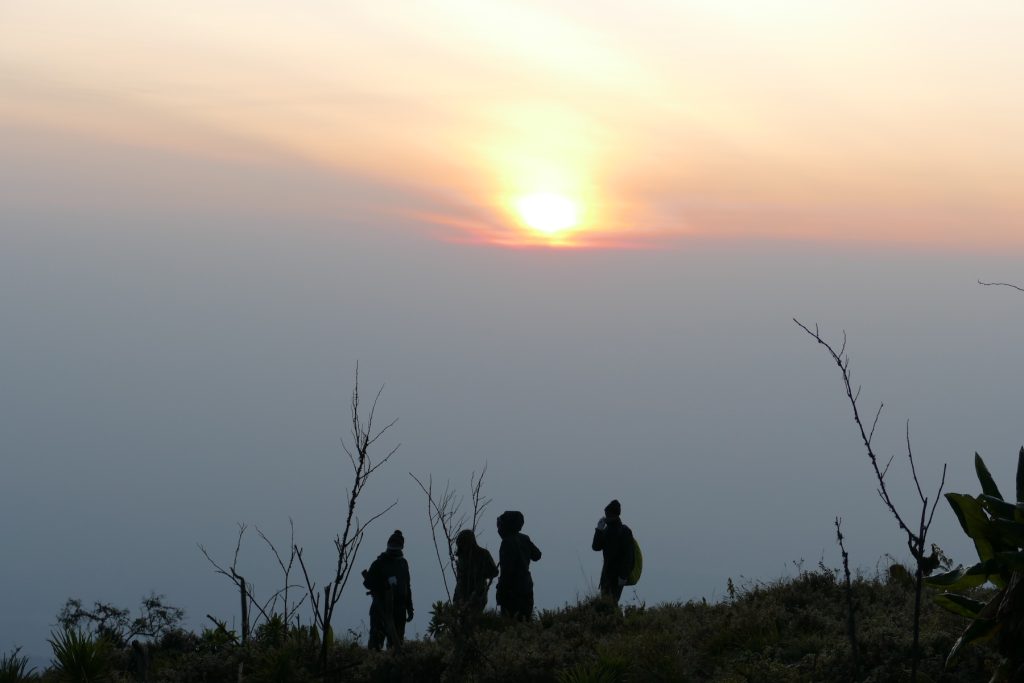
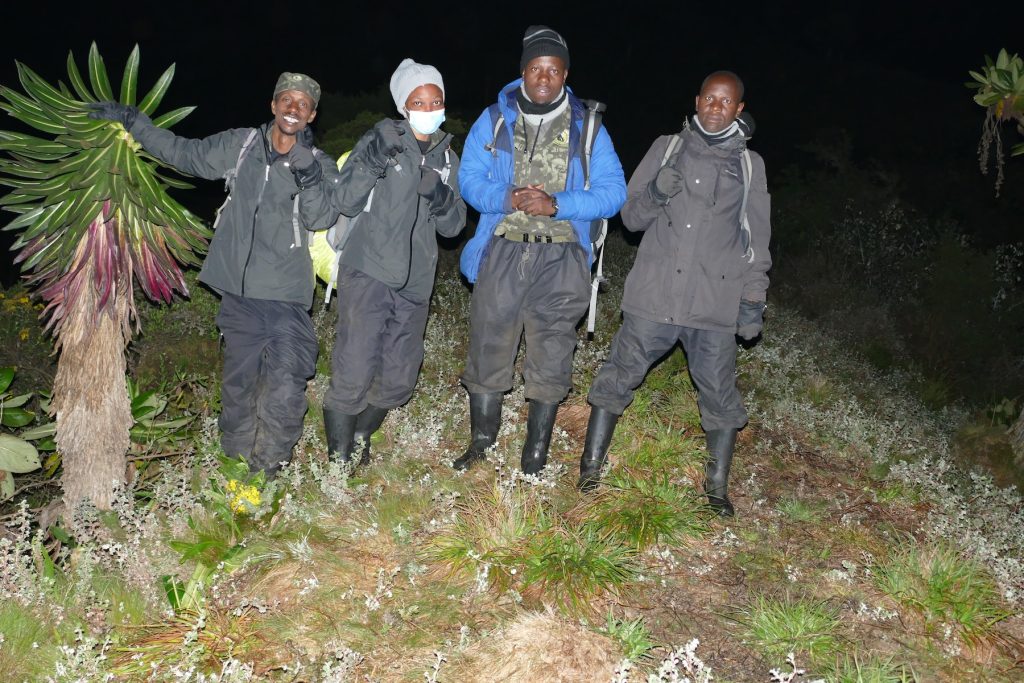
The film crew adapted quickly, carrying heavy equipment across rugged terrain, filming at extreme elevations and even camping overnight near the gorillas along with Fossey Fund staff and Rwandan officials, under special permission granted by the Rwandan Development Board, which oversees Volcanoes National Park.
With this support, they were able to capture rare moments, from sunrise scenes high on the slopes of Mount Karisimbi with the gorillas waking up in their night nests, to dramatic behaviors within the group.
The presence of Fossey’s experienced trackers and researchers in the field was essential to making the movie. Filming wild gorillas requires high levels of coordination and lots of patience,” explains Vecellio. Our field teams, led by Samedi Mucyo, literally opened the way to the gorillas, often crawling and using machetes to cut through branches, as they followed gorilla tracks that are invisible to the untrained eye to locate the gorillas.
In addition, due to the dense forest and harsh terrain, visibility is often very limited, so camera operators need to move around constantly to find usable angles, all while carrying heavy equipment. Fossey Fund trackers and researchers have the experience that helped guide this process safely and efficiently.
Another key aspect that Fossey Fund staff provided was helping the film crew identify individual gorillas. But after spending so much time in the forest, it was truly impressive how skilled the film crew became at this themselves, says Vecellio. Furthermore, interpreting the gorillas’ behaviors also requires expertise. Our field staff even helped predict movements before they happened, anticipating vocalizations and understanding the direction that interactions might take.
And, while the filming focused on certain gorillas, our staff also monitored the location of the gorillas not currently in the scene, especially the dominant silverback.
Science meets storytelling
Another intensive part of the final process happened off-camera.
“Every week, we reviewed new footage together,” Vecellio recalls. “We discussed what we were seeing, what it meant and what might happen next.” These sessions, often involving producers and camera operators, were critical to shaping the narrative.
“They asked deep questions. They wanted to understand the ‘why’ behind every behavior,” says Vecellio.
“It’s not easy to understand all that we see,” Vecellio says. “You have to describe it in a way that is accurate, but also understandable. With wild animals, there are moments that can be difficult to easily explain. Our responsibility was to interpret those moments with care, ensuring that what we share is both accurate and grounded in science.”
Letting nature lead
For Vecellio, the experience reinforced a fundamental truth about wildlife storytelling: “You can plan, you can prepare, but in the end, nature decides the story.” And in this case, the gorillas delivered something extraordinary.
“The main credit goes to them,” she says. “We are just observers. It’s a privilege to witness these moments, and an even greater responsibility to share them truthfully.”
“We are thrilled to see the story of the Pablo family shared with a global audience,” adds Dr. Tara Stoinski. “Our teams have studied this group for decades, and that long-term research was essential to telling the full story of this family, dating back to Dian Fossey’s time, and to interpret what viewers see on screen – from subtle social interactions to major life events. It’s a powerful example of how sustained scientific research can bring extraordinary animal stories to life.”