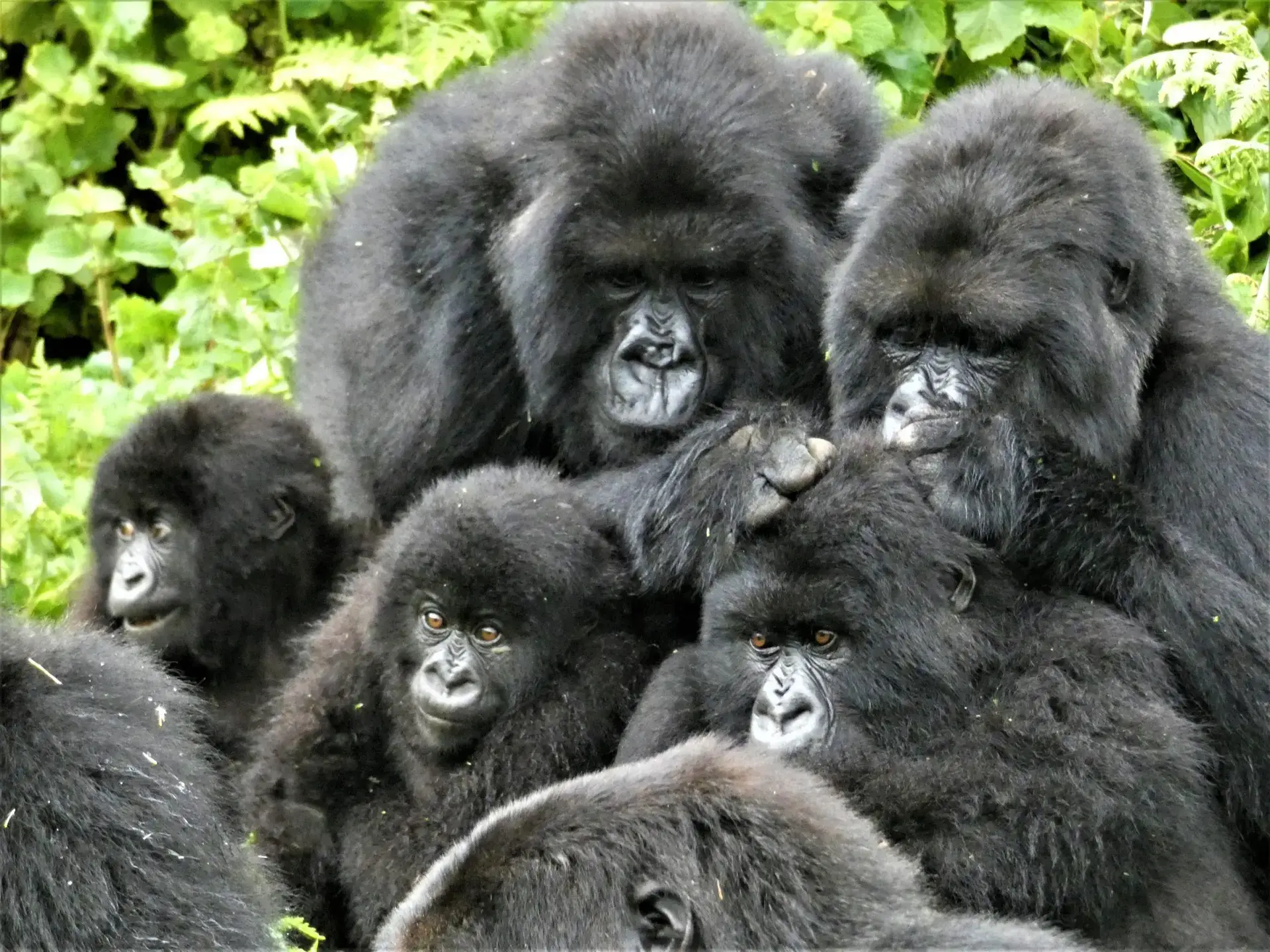
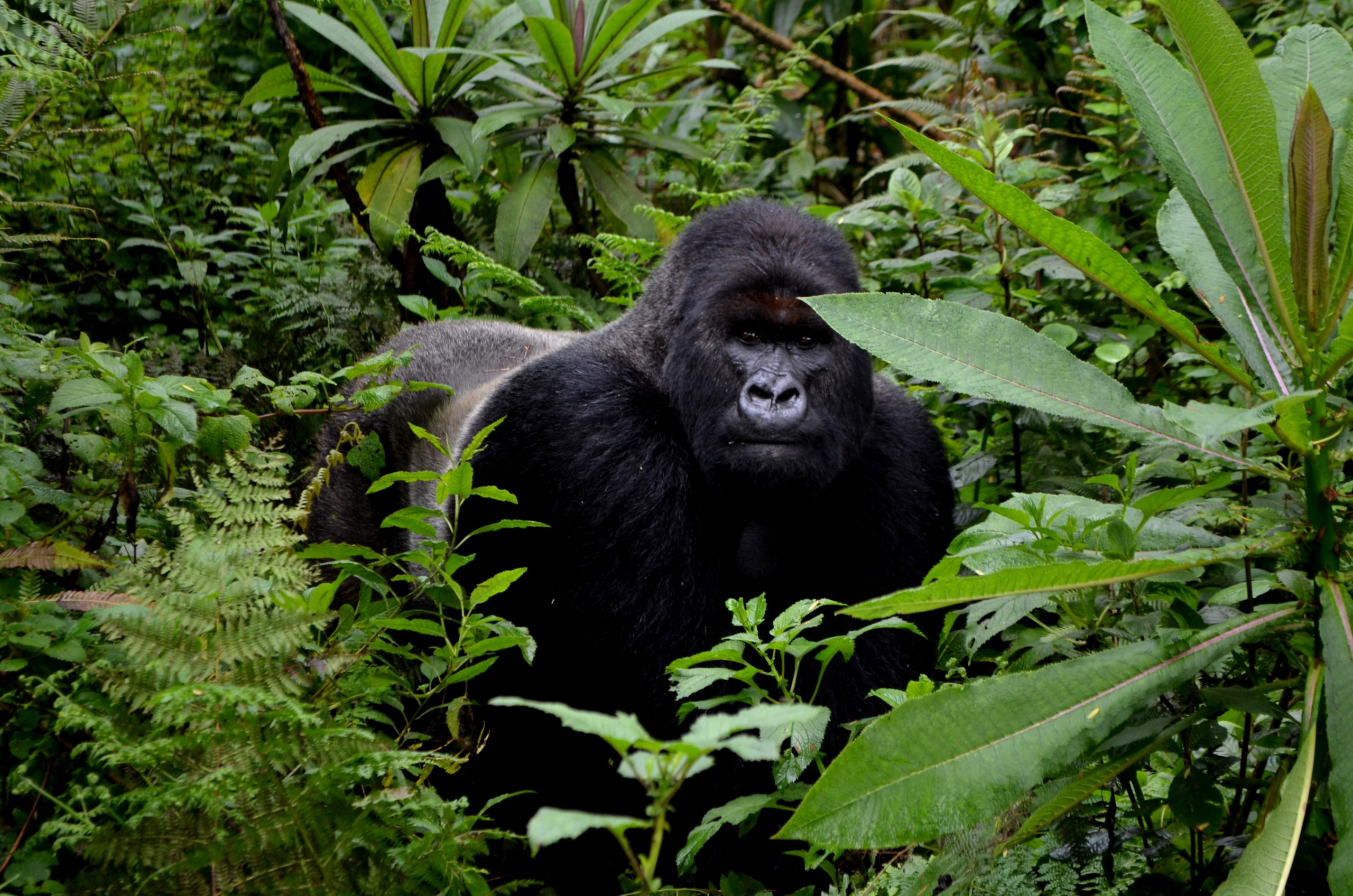
What if scientists could detect the presence of wildlife without ever seeing the animal itself? Imagine identifying a rare or nocturnal species from a water sample – all without a single direct observation.
Thanks to environmental DNA, or eDNA, this has become a reality. As conservationists seek new ways to understand and protect biodiversity, eDNA is transforming how scientists monitor ecosystems. For the Dian Fossey Gorilla Fund, this emerging technology represents an exciting new addition to decades of biodiversity research, offering new opportunities to better understand and protect the forests that gorillas and countless other species call home.
Building on Decades of Biodiversity Science
While the Fossey Fund is best known for protecting gorillas, our scientific work has always extended far beyond a single species.
For nearly 60 years, our researchers have studied the complex ecosystems of forests in Rwanda and the Democratic Republic of the Congo (DRC), documenting everything from gorilla behavior and forest vegetation to birds, mammals, insects and other wildlife. In fact, up to half of the Fossey Fund’s scientific publications now focus on biodiversity, reflecting our growing understanding of the health of the ecosystems in which gorillas live, which is essential for their conservation.
This long-term ecological knowledge provides an invaluable foundation for new technologies like eDNA.

What Is Environmental DNA?
All living organisms leave traces of genetic material behind as they move through the environment. Animals shed hair, skin cells and waste. Plants release pollen and organic matter. These microscopic genetic traces accumulate in the environment and can be collected from sources such as water and air.
Scientists can then analyze these DNA fragments to identify which species have been present in an area, both recently and in the past.
With one sample, you can detect multiple species that are living in that ecosystem. It is an non-invasive method to monitor the overall health of the environment that gorillas live in. – Dr. Deogratis Tuyisingize, biodiversity researcher at the Dian Fossey Gorilla Fund
The result is a powerful new tool for biodiversity monitoring. Environmental DNA does not replace traditional field research, but it can complement it by helping scientists detect species that are difficult to observe directly, including cryptic, nocturnal, migratory or particularly rare animals.
It is important to remember that eDNA provides a snapshot in time rather than a complete inventory of all species present. Like any scientific tool, it is most powerful when combined with other forms of monitoring and ecological research.
How the Fossey Fund Is Contributing
The Fossey Fund is participating in a collaborative eDNA initiative led by the African Wildlife Foundation (AWF), alongside the Rwanda Development Board (RDB) and other partners.
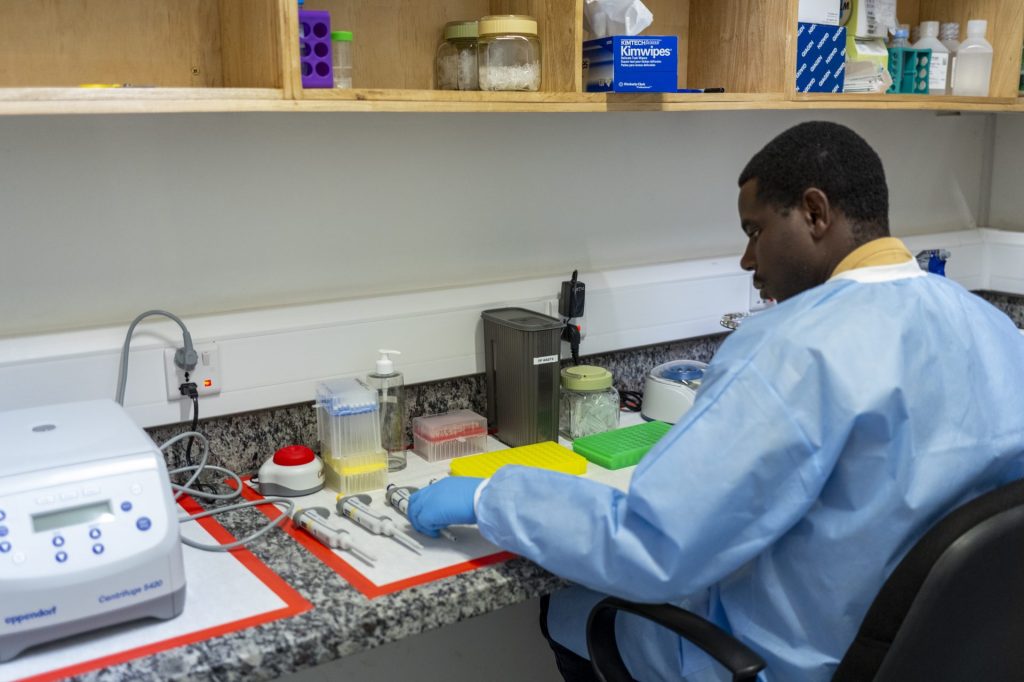
As part of this effort, the Ellen DeGeneres Campus hosted eDNA training workshops, helping build local capacity for this emerging field of conservation science. While the first round of samples are being processed offsite, the Fossey Fund’s new Bruce R. Tolchin Genetics Laboratory will eventually allow us to process our own eDNA samples, creating exciting new opportunities for research and conservation.
But, environmental DNA is only as useful as the reference libraries scientists use to identify genetic material. Because Fossey Fund researchers have spent decades documenting species, habitats and ecosystem dynamics, our long-term datasets can help validate findings and also contribute to the development of reference libraries in places like eastern DRC where very little information exists on what species are present that will support future biodiversity research throughout the region.
Revealing the Hidden Life of Forests
One of the most exciting aspects of eDNA is its ability to reveal species that are difficult to detect through traditional methods. By identifying genetic traces left behind in the environment, researchers can detect elusive species that are rarely seen, active primarily at night or only present during seasonal migrations.
For the Fossey Fund’s eight biodiversity teams who are studying many facets of the biodiversity in Volcanoes National Park, eDNA offers a powerful new tool for complementing field observations and expanding our understanding of the park’s biodiversity. Beyond identifying individual species, it can help scientists better understand how wildlife is distributed across the landscape, assess ecosystem health and identify areas where conservation efforts may be most needed.
The technology also holds tremendous promise for our Nkuba Conservation Area in the DRC. At nearly 2,400 square kilometers, Nkuba is a vast landscape that can be difficult to survey comprehensively. Environmental DNA can help us gain a clearer picture of the species that currently inhabit the area, while also providing clues about species that may have once existed there but became locally extinct due to hunting or habitat loss.
Just as importantly, eDNA could help us measure the long-term success of our conservation efforts. As habitat protection, anti-poaching initiatives and community-based conservation programs continue to strengthen the ecosystem, eDNA may allow scientists to detect the return of species that have become rare or disappeared from certain areas. By tracking changes in biodiversity over time, we can better understand how wildlife populations respond to conservation actions and identify signs of ecological recovery across the landscape.
Why Biodiversity Matters for Gorilla Conservation
Protecting gorillas means protecting entire ecosystems. Mountain gorillas and Grauer’s gorillas depend on healthy forests for food, shelter and long-term survival. Understanding the broader biodiversity of these ecosystems helps researchers assess forest health, identify environmental changes and make more informed conservation decisions.
Every species contributes to the functioning of an ecosystem. By understanding the full picture – not just gorillas – we can better protect the habitats they depend on.
Looking Ahead
Environmental DNA represents an exciting step forward for conservation science, but it is most powerful when combined with traditional field research and long-term ecological monitoring.
At the Fossey Fund, we see eDNA as one more tool that can help us ask new questions, discover hidden patterns and deepen our understanding of the natural world. Combined with nearly six decades of field observations and an expanding genetics program, through the recently established genetics lab at our Ellen Campus, this technology has the potential to significantly enhance our conservation efforts.
As we approach the Fossey Fund’s 60th anniversary, eDNA demonstrates how conservation advances through both experience and innovation. By combining decades of research with emerging technologies, we can deepen our understanding of biodiversity and strengthen our efforts to protect gorillas and their forest homes. – Dr. Tara Stoinski, President & CEO/Chief Scientific Officer of the Dian Fossey Gorilla Fund.
As new tools become available, we are excited to embrace innovations that complement our existing work and expand our ability to protect biodiversity.
The future of conservation will depend on both experience and innovation. By combining traditional field science, long-term ecological research and emerging genetic technologies like eDNA, we can gain a more complete understanding of the ecosystems we work to protect – and ultimately help ensure a future where gorillas, forests and people thrive together.
The Bruce R. Tolchin Genetics Laboratory was made possible by the family of Bruce Tolchin, Cleveland Metroparks Zoo, Dallas Zoo, Detroit Zoo, North Carolina Zoo, University of Oregon and many other generous individual donors.