Training the next generation of conservation scientists means more than building research skills in the field. It also means empowering emerging scientists to share their findings, influence conservation conversations and contribute knowledge that advances primate conservation across Africa.
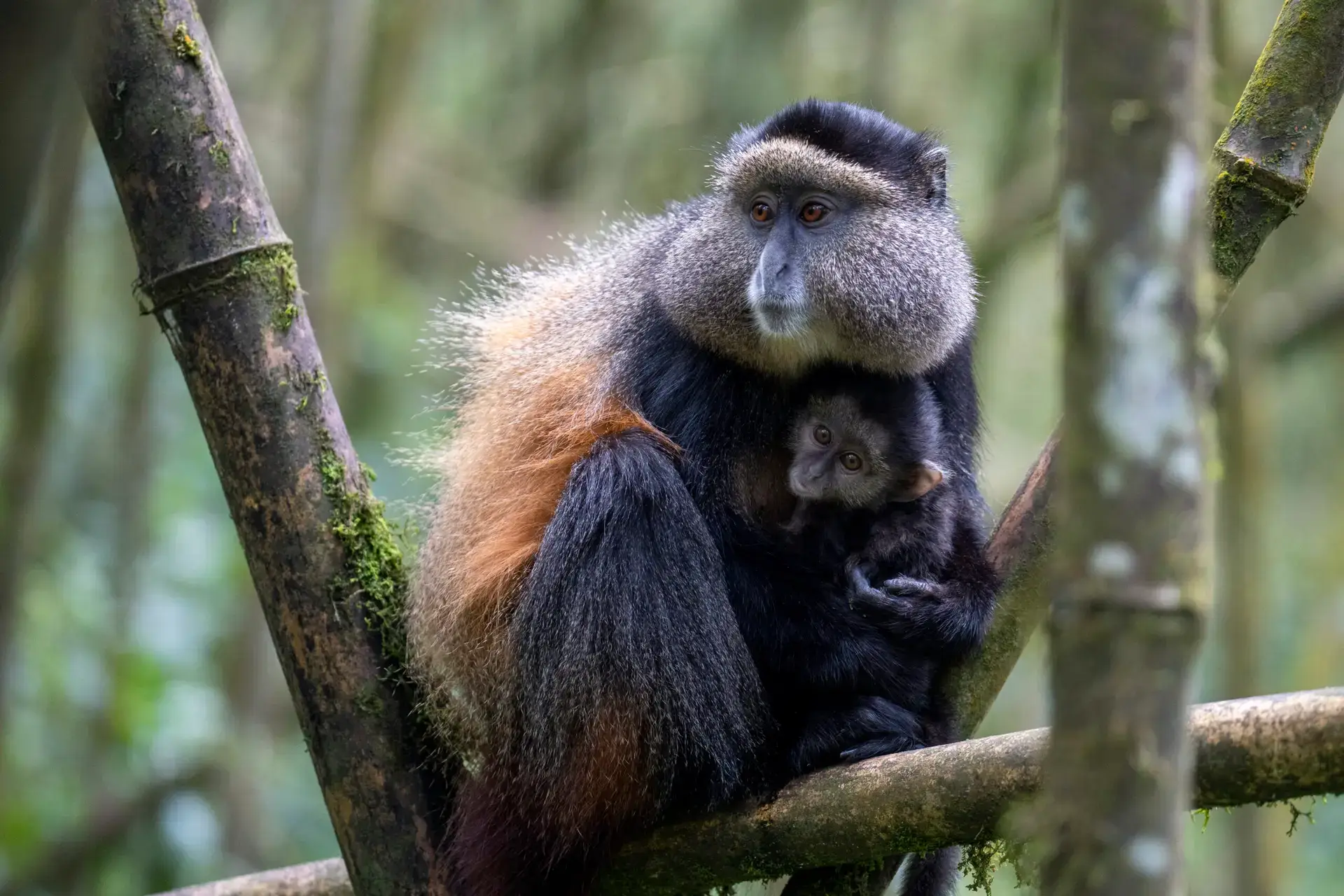
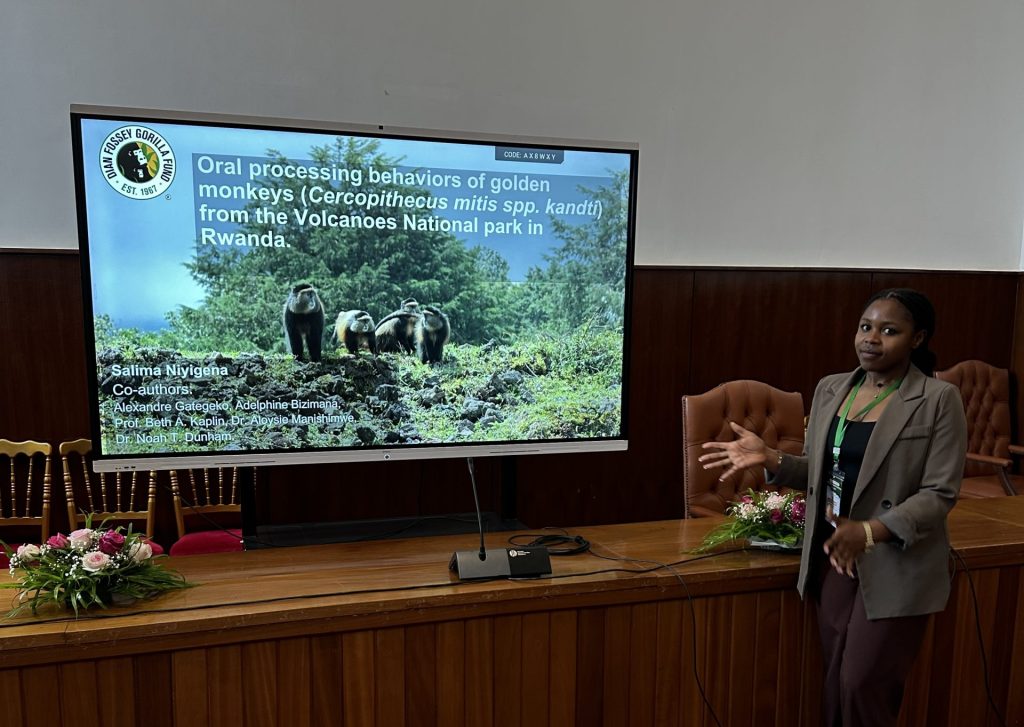
For Salima Niyigena, a research assistant in the Dian Fossey Gorilla Fund’s biodiversity program in Rwanda, that opportunity came at the 4th African Primatological Society Congress in Cameroon, where she presented her research on the feeding behaviors of golden monkeys in Rwanda’s Volcanoes National Park.
Salima’s participation highlights the Fossey Fund’s commitment to developing African conservationists and ensuring their research reaches a broader scientific community, where findings can inform understanding, inspire collaboration and help shape future conservation efforts.

From Professional Intern to Presenting Researcher
Salima began her journey with the Fossey Fund in 2023 as a professional intern while completing her senior bachelor’s research project on the diets and feeding behaviors of golden monkeys. Since then, she has continued developing her expertise as a full-time research assistant in the biodiversity program.
Her research examines how golden monkeys use different oral processing techniques when eating different food sources, and how these behaviors relate to patterns of tooth wear. Understanding how primates process food can offer valuable insights into their feeding ecology and adaptations to their environment.
The findings were published last year in the American Journal of Primatology, providing a scientific contribution to the growing body of knowledge about golden monkey behavior and biology. Presenting the research at the African Primatological Society Congress gave Salima an opportunity to share this work with primatologists and conservation professionals from across the continent.
Bringing African Primate Research to a Wider Audience
Held in Cameroon from Sept. 8-11, the 4th African Primatological Society Congress brought together researchers and conservation practitioners under the theme, “Recognising the Role of Indigenous and Local Communities in the Conservation of African Primates.”
The congress provided a platform for exchanging scientific findings, building professional relationships and exploring approaches to primate conservation across Africa. By presenting her research, Salima helped bring findings from the Fossey Fund’s work in Rwanda into these broader conversations, contributing to shared knowledge about African primates.
The Fossey Fund was also represented by Urbain Ngobobo, director of Congo programs, who presented on the conservation of Grauer’s gorillas in the Democratic Republic of the Congo. Together, their participation showcased the organization’s work across different areas of primate research and conservation, from understanding primate biology to addressing the challenges of protecting endangered great apes and their habitats.
Investing in the Next Generation of Conservation Leaders
For early-career scientists like Salima, presenting at a major scientific congress is an important step in professional development. Engaging with peers, meeting experienced researchers and learning about new approaches can help emerging scientists build the skills and connections needed to advance their work.
“As an early-career primatologist, I found it inspiring to meet other young researchers passionate about making a difference. This experience broadened my perspective and motivated me to continue growing professionally,” Salima shares.
She also sees the experience as an opportunity to bring new insights back to her work at the Fossey Fund.
“I look forward to applying the knowledge, insights and connections gained from this congress to our ongoing research and conservation efforts at the Fossey Fund,” she says.
Supporting scientists like Salima is central to the Fossey Fund’s commitment to conducting critical science and creating the next generation of conservationists. Through hands-on research experience, professional development and opportunities to share findings with the wider scientific community, the organization helps emerging African scientists strengthen their expertise and contribute to conservation beyond their immediate research projects.
As Salima continues her career, her participation in the congress represents both a personal milestone and a broader contribution to African primatology. By equipping scientists to conduct rigorous research and share their findings on larger platforms, the Fossey Fund is helping build the knowledge, partnerships and scientific leadership essential to the future of primate conservation.