
The Dian Fossey Gorilla Fund is celebrating major milestones in the Democratic Republic of the Congo (DRC) – marking 25 years of conservation work, 15 years since we began working with local communities to establish a community-led conservation forest – the Nkuba Conservation Area – and five years since the first 1,100 square kilometers of the Nkuba area received official recognition from the Congolese government.
Our work with community forests in this area is critical to the survival of critically endangered Grauer’s gorillas, most of which live outside of national parks. Research has also shown that community-led conservation efforts here are having greater impact than traditional protected areas.
Now, that effort is growing even further. With the recent official recognition of an additional nearly 700 square kilometers within Nkuba, supported in part by Rainforest Trust, the Fossey Fund and its partners are continuing to expand protection across one of the most important ecosystems on Earth: the Congo Basin. Seventy-five percent of the 2,400-square-kilometer Nkuba Conservation Area now has official government recognition as Community Forest Concessions (CFCLs) – forming a vast, connected landscape nearly 40 times the size of Manhattan.
A powerful model: community-led conservation
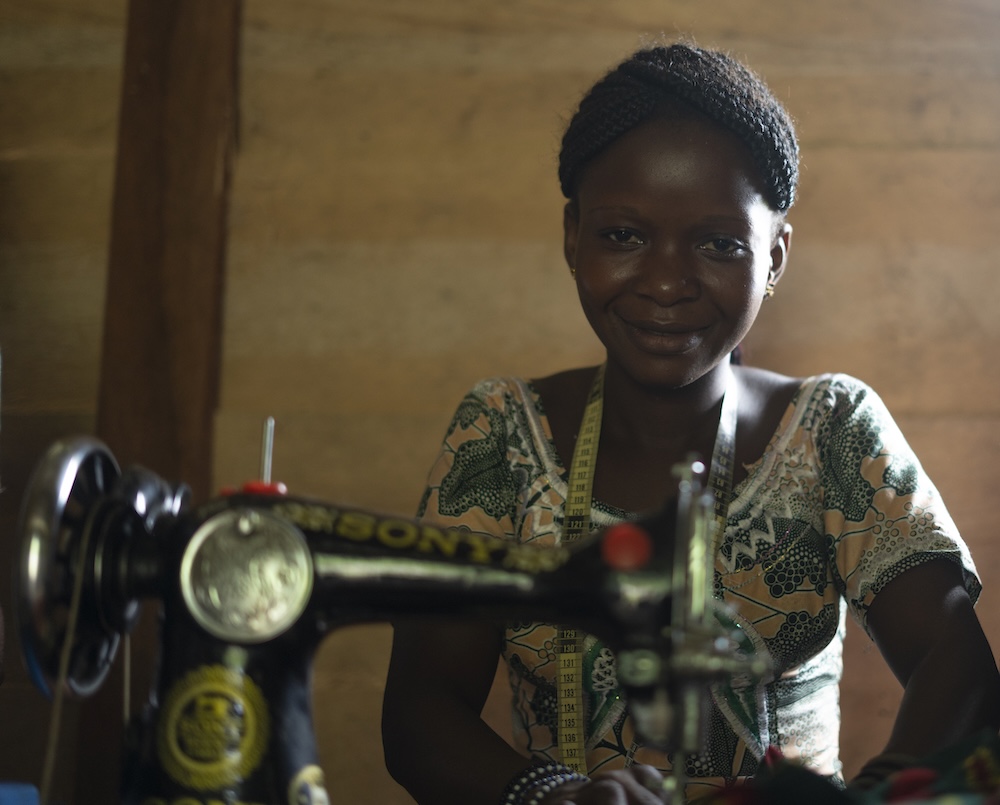
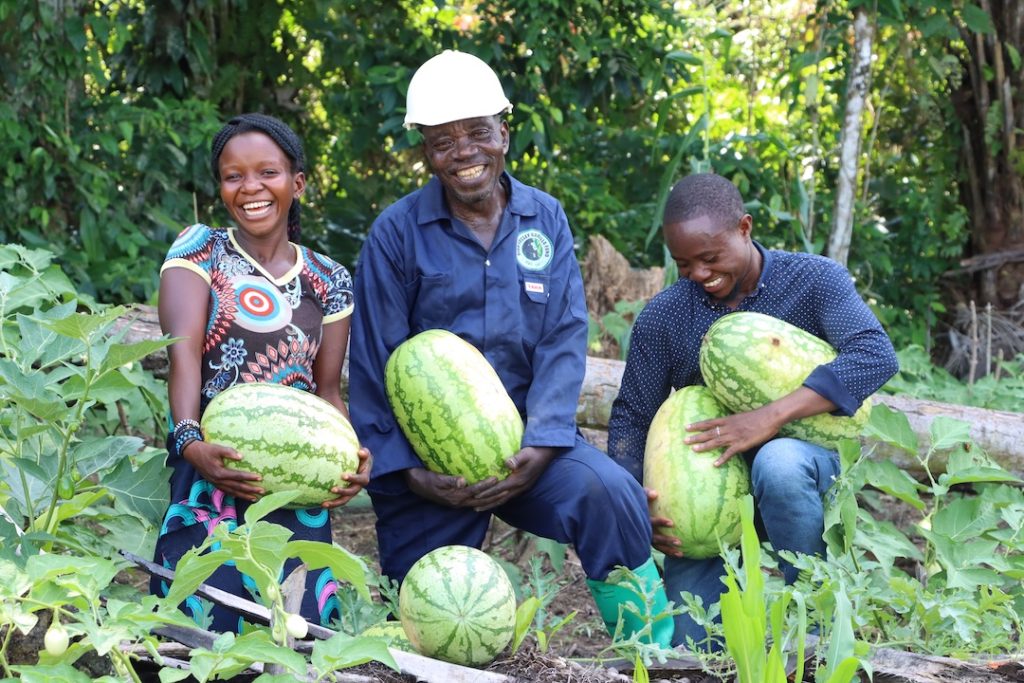
At the heart of Nkuba is a simple idea: conservation works best when local communities lead the way. Under the stewardship of local landowners, forests that were once at risk are now recovering. Wildlife is returning. And families are building sustainable livelihoods tied directly to protecting their environment.
This includes the Grauer’s gorilla populations, as well as eight other globally threatened large mammals such as chimpanzees and forest elephants – all of which depend on intact rainforest to survive.
Even in the face of significant challenges throughout the years, this commitment has held strong. For example, last year a major increase in civil unrest in eastern Congo made access to Nkuba more difficult than ever, turning short trips into journeys that took weeks. Yet, even when some community members were forced to seek refuge in the forest, they safeguarded it – refusing to resort to poaching or deforestation despite the crisis. It’s a powerful example of what’s possible when communities have true ownership over their land.

What is a community forest concession – and why does it matter?
Community Forest Concessions (CFCLs) are one of the most effective conservation tools in the DRC. These legal designations give traditional landowners the rights to manage and protect their forests for the long term – creating a sustainable alternative to traditional, state-managed protected areas.
Securing a CFCL is a rigorous, multi-step, multi-year process that includes:
- Mapping ancestral lands
- Community consultation and governance planning
- Biodiversity surveys and land-use design
- Formal government approval
With our support, communities gain the tools and legal authority to protect their forests – and benefit from doing so. The results are transformative: when communities can sustainably manage their land, pressures on the forest decline, poaching drops and wildlife begins to recover.

Conservation with global impact
The Nkuba Conservation Area is not just a local success – it’s globally significant. This landscape is home to several thousand Grauer’s gorillas, a subspecies that was just included in the International Union for Conservation of Nature’s (IUCN) 25 most endangered primates list. It also stores more than 250 million tons of carbon, helping regulate the global climate.
Since the Fossey Fund began working in Nkuba, the results have been remarkable. Ape populations have remained stable for more than a decade and a variety of other important species – such as forest elephants – are being documented returning to the forest. In addition, the local population is benefiting, through employment opportunities, educational and livelihood programs and a thriving forest ecosystem.
A blueprint for the future of conservation
Nkuba has been recognized as a Key Biodiversity Area by the IUCN and is being considered as a model for “Other Effective Conservation Measure (OECM),” which recognizes sustainable models of community-led conservation worldwide.
As Urbain Ngobobo, the Fossey Fund’s DRC Country Director, explains: “Securing these forest recognitions is a long and rigorous process, led by communities who are deeply committed to protecting their ancestral lands. What we are seeing here is not only the protection of critical habitat for Grauer’s gorillas and other wildlife, but proof that when communities have rights and support, they can safeguard their forests even in the most challenging circumstances.”
And as Dr. Tara Stoinski, President and CEO of the Fossey Fund, puts it: “When communities have the authority and capacity to manage their forests, conservation moves from protection to permanence. When people have the power to protect their own land, nature doesn’t just survive – it thrives.”
From protecting gorillas to preserving one of the most vital forests on Earth, the Nkuba Conservation Area is proving that community-led conservation isn’t just effective – it’s essential for the future of our planet.


