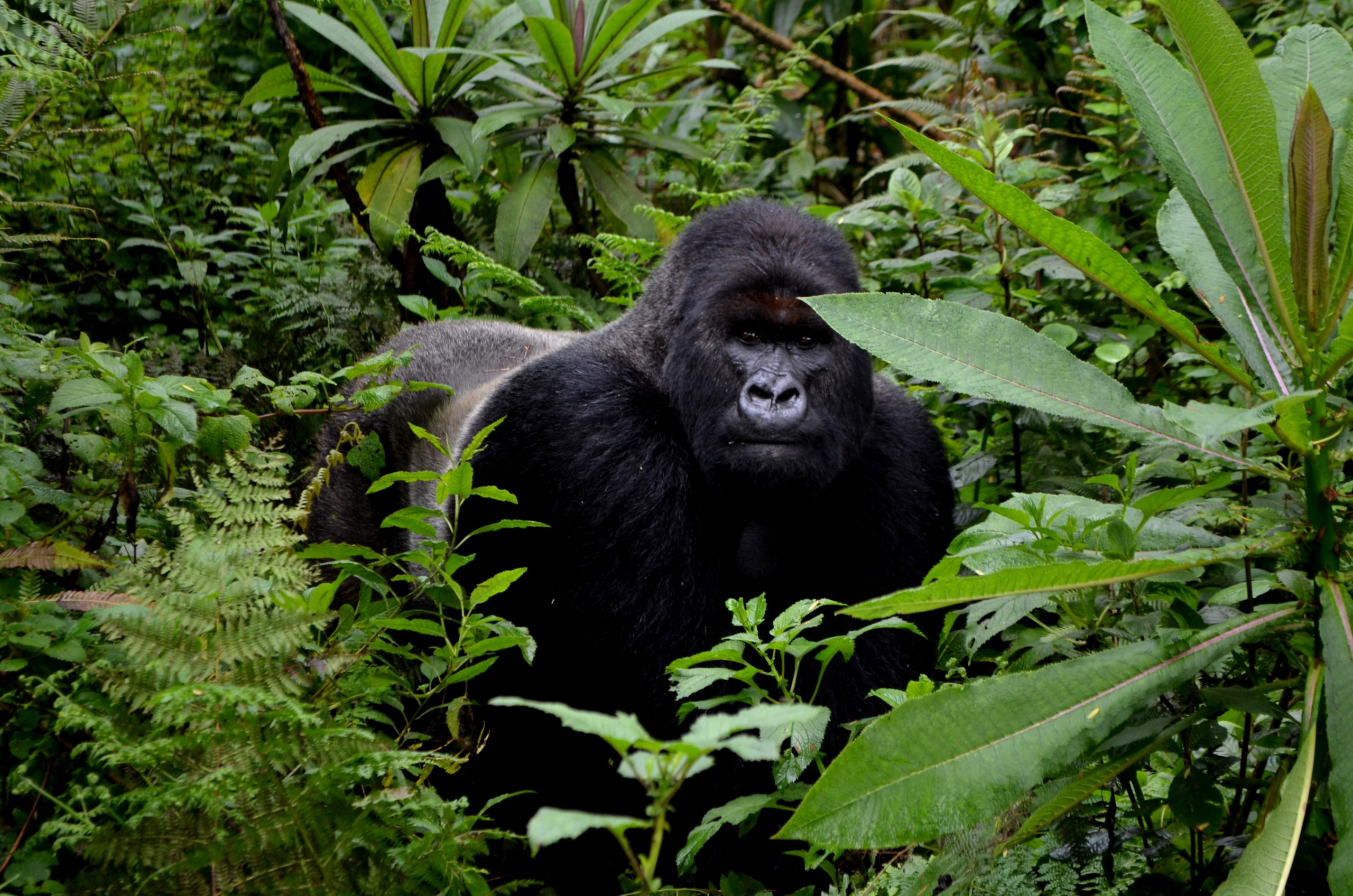
When we think about gorilla families, mothers are often the focus. They carry, nurse and protect their infants through the earliest years of life. But long-term research by the Dian Fossey Gorilla Fund is revealing another important family member whose influence has largely gone unnoticed: the grandmother.
Unlike humans, gorilla grandmothers do not always have the opportunity to know their grandchildren. Daughters often leave the group where they were born, older females may die before grandchildren are born, and family groups frequently change over time. As a result, it is relatively uncommon for multiple generations of females to remain together.
When grandmothers and grandchildren do share the same group, however, researchers gain a rare window into how family relationships shape gorilla society across generations.
Why Grandmothers Matter
Female gorillas form the foundation of family life. Most gorilla groups are led by a dominant silverback, who fathers offspring with multiple females. While the silverback protects the group, mothers provide nearly all of the day-to-day care for their infants.
These maternal family lines, known as matrilines, create some of the strongest and longest-lasting social bonds in gorilla society. When daughters remain in the group they were born in and later raise their own offspring there, researchers can observe how grandmothers contribute to the next generation.
Years of behavioral observations suggest that grandmothers provide more than companionship. They groom, rest in close physical contact, play with young gorillas and offer social support that may ease the demands of raising infants.
Long-term monitoring has allowed the Fossey Fund to document several remarkable examples.
Five Generations of One Family
At 42 years old, Gutangara is the oldest known living grandmother among the Fossey Fund’s long-term study groups.
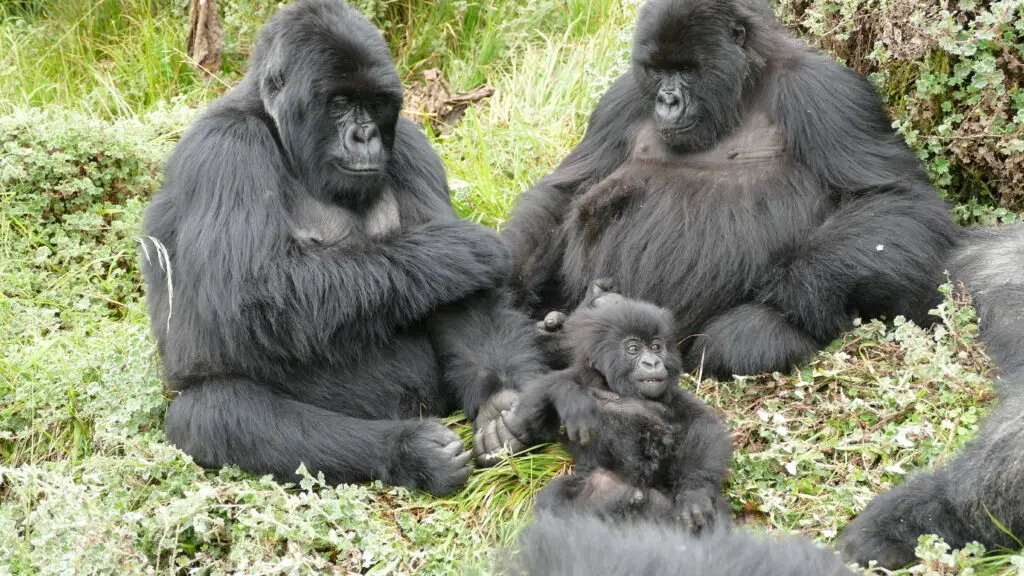
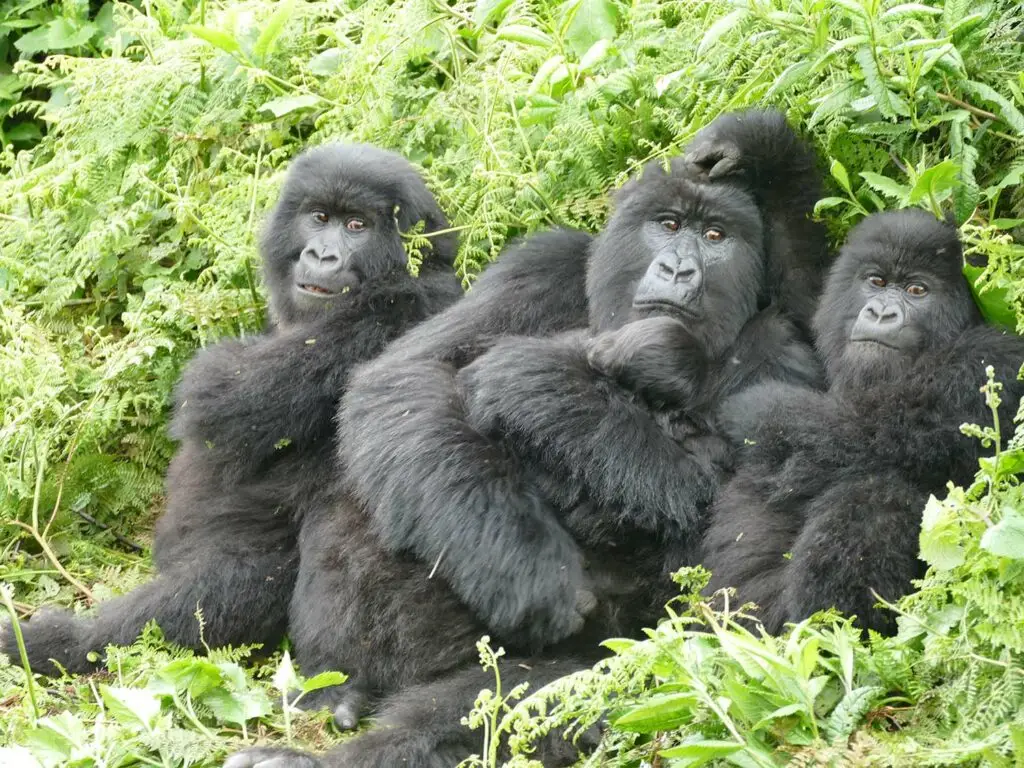
One of her daughters, Shishikara, lives with her in Dushishoze’s group along with Shishikara’s two sons, Kira and Inganzo. The two young gorillas have spent their entire lives alongside their grandmother.
Their family became even more unusual when Gutangara gave birth around the same time as her daughter. As a result, Gutangara’s youngest infant grew up alongside nephews of nearly the same age. Researchers frequently observe the extended family resting, playing and grooming together, with both mothers caring not only for their own offspring but also showing affection toward each other’s young.
Now that both infants have been weaned, researchers are watching to see whether the two females might give birth again around the same time. If Gutangara has another infant, she would become the oldest female ever recorded giving birth in the Fossey Fund’s long-term study.

A Grandmother at Just 20 Years Old
At the opposite end of the spectrum is Ishyaka, the youngest living grandmother in the population we study.
Living in Mutobo’s group, Ishyaka became a grandmother at just 20 years old after her daughter, Akariza, gave birth to her first infant at age 8, well before the average age of about 10 for a female gorilla’s first birth.
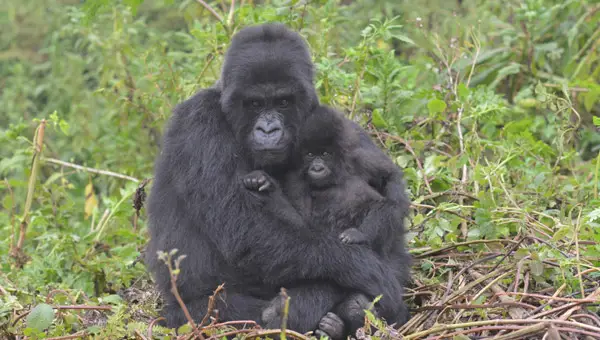
Researchers often observe Ishyaka spending time with her granddaughter, Atete, allowing Akariza brief moments away from infant care. While these interactions may appear subtle, they can provide valuable support for a young mother.
Ishyaka also belongs to one of the most remarkable family lines ever documented. She is part of the matriline of Effie, a famous female first observed by Dian Fossey in 1967. From Effie to Atete, researchers have been able to follow five generations of the same maternal family, an extraordinarily rare achievement made possible by nearly six decades of continuous monitoring.
Family Ties That Endure
Long-term monitoring has also revealed that grandmother-grandchild relationships can survive years of separation.
In December 2023, Muganga transferred from Musilikale’s group to Pablo’s group, leaving behind her daughter, Rugira. Nearly two years later, Muganga’s 9-year-old granddaughter, Urungano, also dispersed and joined Pablo’s group.
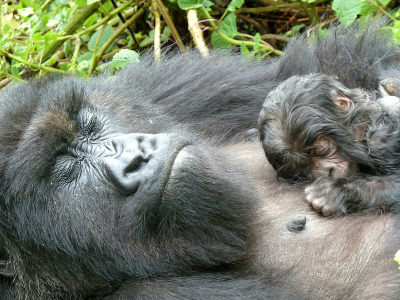
The reunion offered researchers a rare opportunity to observe whether the two recognized one another after years apart. Their renewed bond suggested they did, demonstrating that grandmother-granddaughter relationships may persist even after long separations.
Welcoming a New Generation
Researchers are also following another young grandmother, Ubufatanye, in Musilikale’s group.
At 22 years old, Ubufatanye became a grandmother when her daughter, Tabaro, gave birth to her first infant earlier this year.
Ubufatanye, Tabaro and Tabaro’s siblings have long maintained close relationships, and the family’s newest arrival has only strengthened those bonds. Researchers frequently observe the family resting together and forming grooming chains that include the infant.
When Grandmothers Become Even More Important
Sometimes a grandmother’s role becomes critical following the loss of a mother.
Mukecuru, one of the oldest females monitored throughout her lifetime, experienced this after her daughter, Mitimbili, died prematurely, leaving behind three sons.
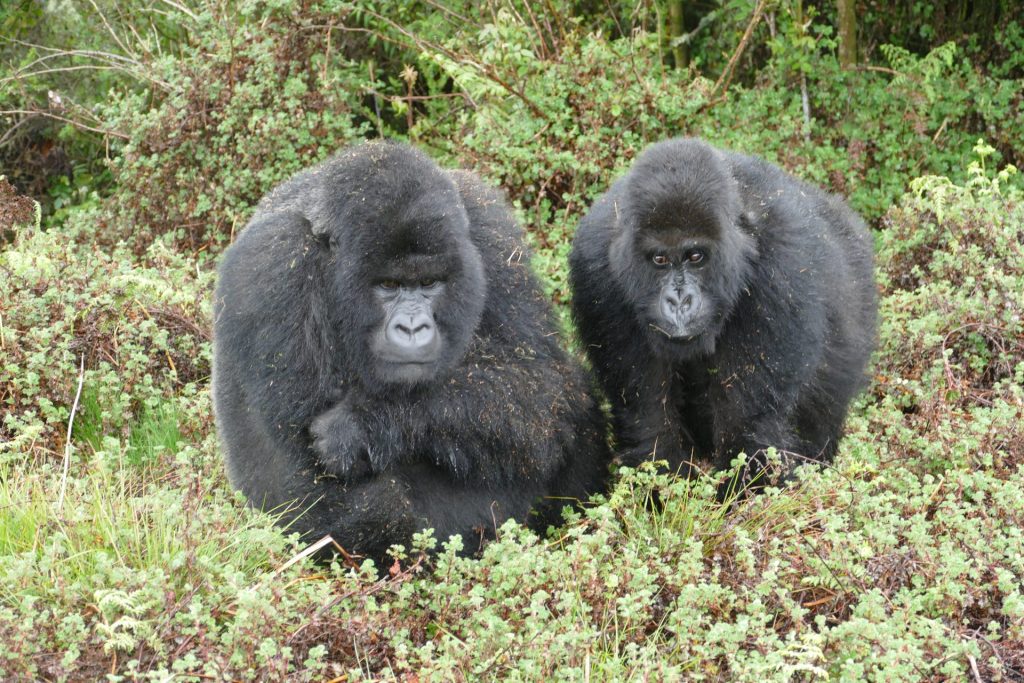
The young males remained closely bonded to Mukecuru as they matured. When Mukecuru disappeared in April 2025, likely because of illness associated with old age, her grandson Isooko, already a 13-year-old silverback, was repeatedly observed searching for her along the edge of the group.
It was a powerful reminder that these family bonds can last well into adulthood.
New Discoveries Through Expanded Monitoring
As the Fossey Fund has expanded monitoring to additional gorilla groups across Volcanoes National Park, researchers continue discovering new examples of multigenerational family life.
One particularly notable case comes from Kwitonda’s group, where elderly Mbilimbili is the grandmother of four grandchildren from two daughters. Although her exact age is unknown, researchers estimate she is between 40 and 44 years old, potentially making her even older than Gutangara.
Mbilimbili’s family forms one of the largest matrilines in the group, and researchers regularly observe the close relationships she maintains with her daughters and grandchildren.
A Deeper Understanding of Gorilla Families
These observations highlight that gorilla families are shaped not only by mothers and infants, but also by relationships that can span generations.
Because the Fossey Fund has followed some gorilla families continuously since Dian Fossey began her research in 1967, scientists can document social bonds that unfold over decades, something almost impossible to observe in most wild animal populations.
Each new grandmother, daughter and grandchild adds another chapter to that story, revealing that the strength of gorilla society lies not only in its silverbacks, but also in the enduring bonds passed from one generation of females to the next.
This article is part of a series presented by the Fossey Fund’s gorilla program Senior Advisor Veronica Vecellio, focusing on the mountain gorillas the Fossey Fund protects and studies every day in Rwanda.